
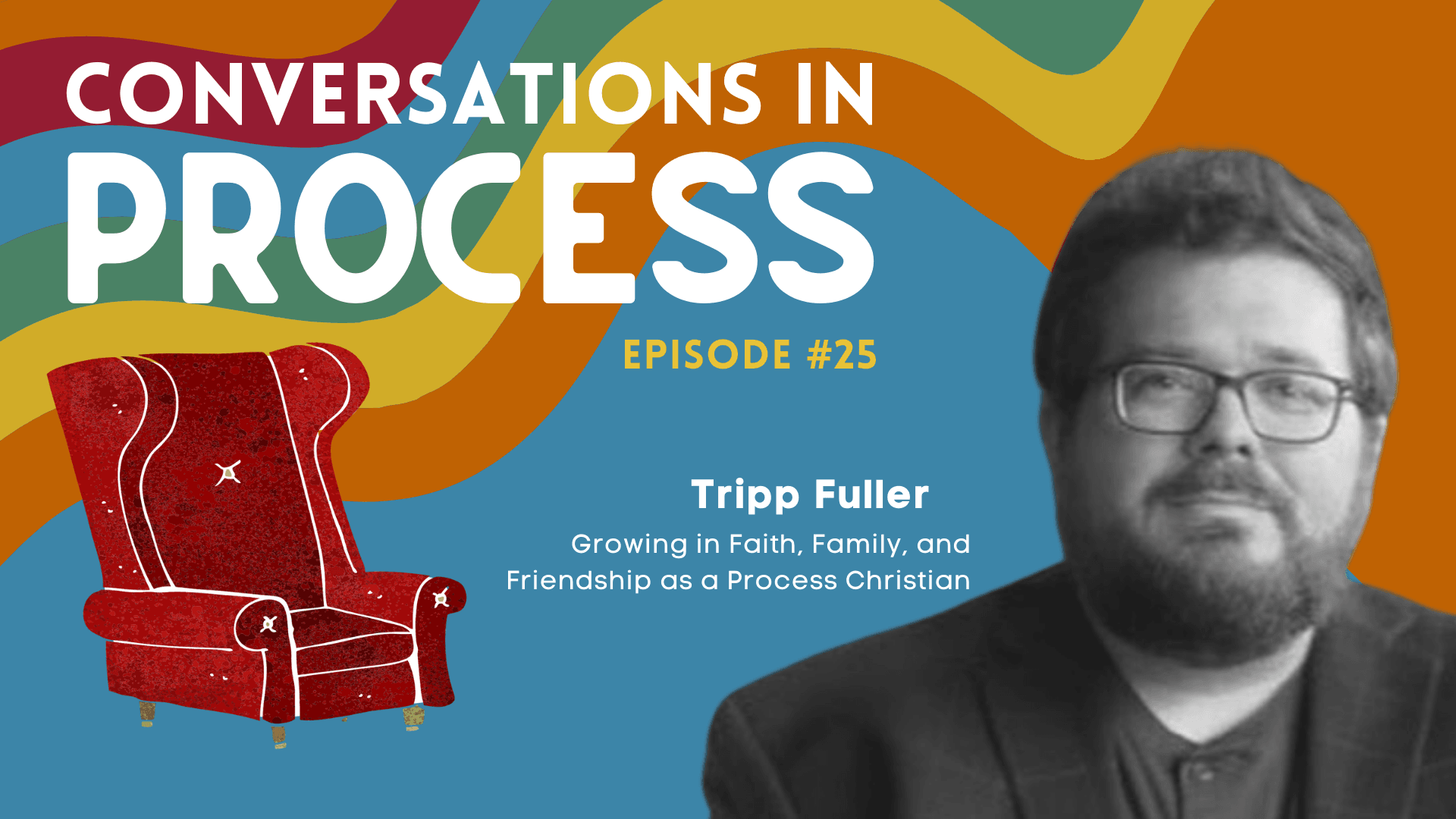




In this episode of Conversations in Process, Jay interviews renowned podcaster and process theologian Tripp Fuller, digging into the more personal side of his faith and theology. Tripp is a Postdoctoral Research Fellow in Theology & Science at the University of Edinburgh. He received his PhD in Philosophy, Religion, and Theology at Claremont Graduate University. For over 13 years Tripp has been doing the Homebrewed Christianity podcast where he interviews different scholars about their work. In 2020 he published Divine Self-Investment: An Open and Relational Constructive Christology.
In this conversation, Jay asks Tripp to trace his theological development from his formative years, asking what influenced his perspectives and how he grappled with issues such as the authority of sacred texts. Jay then asks of music, and what religious or spiritual role this played and continues to play in Tripp’s life—a topic which led to a number of insights about religious pluralism, the function of symbolism, and the logic of the one. In closing, Tripp talks about how he shares his faith with his children in light of their various phases of life, and the importance of the religious virtue of friendship which he sees as core to the message and life of Jesus.
LINKS:
- Tripp’s website
- Homebrewed Christianity
- Theology Beer Camp: The God Pods Strike Back
- Divine Self-Investment: An Open and Relational Constructive Christology
- Conversations in Process
- The Cobb Institute
- Open Horizons
Guest Bio

Tripp Fuller is an American theologian, minister, and broadcaster. He is the founder and host of Homebrewed Christianity, one of the most downloaded theology programs in podcasting. Tripp earned his B.A. at Campbell University, his M. Div. at Wake Forest University, and his Ph.D. in Philosophy, Religion, and Theology at Claremont Graduate University. He is currently a Postdoctoral Research Fellow in Theology and Science at the University of Edinburgh, and the author of Divine Self-Investment (SacraSage Press, 2020).
Host Bio

Jay McDaniel is a philosopher and theologian known for his work in process theology and open and relational thought. Influenced by Alfred North Whitehead, his writing explores the relational nature of reality, the role of creativity in the universe, and the spiritual significance of everyday life. He has long been associated with the Center for Process Studies and with Open Horizons, where he helps develop resources that connect philosophy, spirituality, ecology, and the arts. McDaniel writes for both academic and general audiences, often drawing on literature, music, theater, and nature to illuminate philosophical ideas. His work emphasizes compassion, imaginative freedom, and the possibility of cooperative and sustainable communities. A teacher, essayist, and musician, he is especially interested in how process philosophy can enrich religious life, interfaith dialogue, and public culture. Through essays, courses, and collaborative projects, he seeks to make complex philosophical ideas accessible and practically meaningful for contemporary life.