
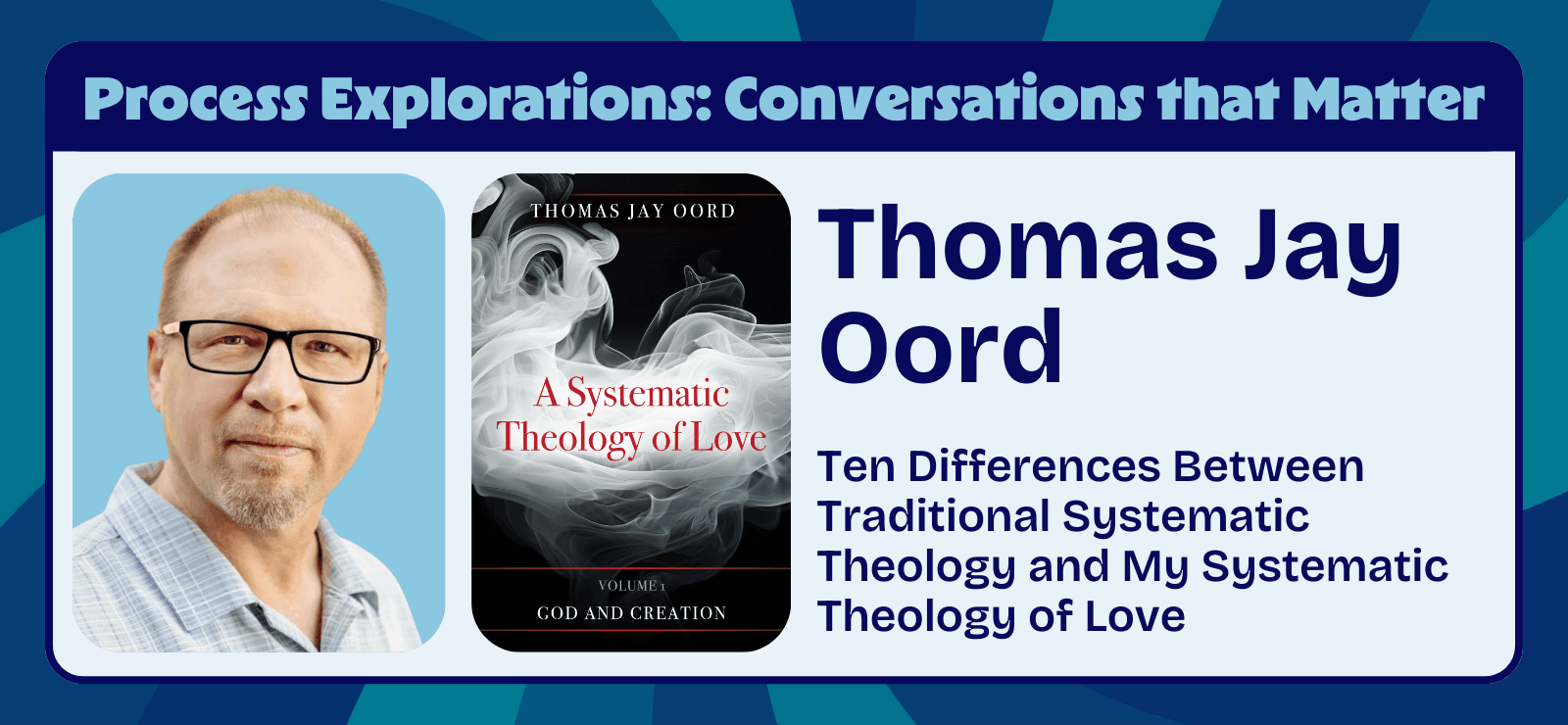
Ten Differences Between Traditional Systematic Theology and My Systematic Theology of Love | Thomas Jay Oord
Event Type:
- Discussion, Presentation
- (Online)
Program:
- Process Explorations
Theme:
- Building Alternative Futures
Featuring:
- Thomas Jay Oord
Organizers:
- Center for Process Studies
According to ChatGPT, the thirty top-selling systematic theologies today are written by white men in the Evangelical Reformed Christian tradition. Most, if not all, of those theologies privilege divine sovereignty, and the doctrines proposed align with the notion that deity rules over all.
The first volume of Thomas Jay Oord’s new Systematic Theology of Love privileges God’s uncontrolling love. An open and relational theological vision informs his theological proposals, not only when it comes to God but also when it comes to creation.
The shift from theologies oriented around controlling power to one oriented around uncontrolling love radically reshapes what systematic theology can be. It centers experience in bold ways, and not just the experiences of white men. In this session, Thomas Jay Oord explores ten differences between his systematic theology of love and traditional systematic theologies.
Featuring

Thomas Jay Oord, PhD is a theologian, philosopher, and scholar of multi-disciplinary studies. Oord directs the Center for Open and Relational Theology and doctoral students at Northwind Theological Seminary. He is an award-winning author and has written or edited more than fifty books. A gifted speaker, Oord lectures at universities, conferences, churches, and institutions. He is known for his contributions to research on love, science and religion, open and relational theology, the problem of suffering, and advocacy for the full inclusion of queer people. Website: thomasjayoord.com
Watch the Recording
Enjoying the recording and want to make sure you’re in the loop for future uploads? Click here to subscribe to the Center for Process Studies on YouTube!
RSVP for this Event
Disclaimer: This event is open to the public and will be recorded. If you choose to enable your camera or participate in any discussions, your voice and likeness will be recorded, and may be posted on the Center for Process Studies websites and social media, or included in CPS materials and/or publications for noncommercial purposes. If you do not want your voice or likeness to be shared in any public venues, please send an email to optout@ctr4process.org.