

Remembering Transformative Leaders: Wendell Berry, Gloria Steinem, Dolly Parton
Event Type:
- Discussion, Presentation
- (Online)
Program:
- Process Explorations
Featuring:
- Philip Clayton, Lynn De Jonghe, and May Hartness
Organizers:
- Center for Process Studies
The fall series of Process Explorations explores Compassion, Creativity, and Global Citizenship. At a time when many parts of the world are in political, economic, ecological, and ethical turmoil, what might process thought and ways of life contribute to the deepening of compassion and creativity and to practices of global citizenship? The session on September 22 explores this question through the lives of three remarkable persons who contributed in quite different ways to the quality of life in the United States, both for human communities and for the entire ecosphere.
The three figures include Wendell Berry, whose return to simplified life, farming, and writing in his native Kentucky has inspired individuals and even large communities in ecological living. Philip Clayton, a leading architect of the Ecological Civilization movement will reflect on Berry’s life. Speaking to Gloria Steinem will be Lynn De Jonghe, a strong feminist herself and an educator, author, and poet. Finally, Dolly Parton’s life and work will be excavated by May Hartness, recognizing Parton’s music, life practices, bold protests, and generous relationships. May is Senior Director of Program in the Registrar’s Office of Boston University School of Theology and a student of spirituality, film, and literary imagination.
These three presenters will uncover important insights that can expand human understandings and practices of compassion and creativity and enhance citizenship in the world.
Featuring

Dr. Philip Clayton has taught for several decades at Claremont School of Theology; written or edited 26 books; held guest professorships at Harvard, Univ. of Cambridge, and Munich; founded (with Andrew Schwartz) the Institute for Ecological Civilization; worked with Zhihe Wang and Meijun Fan for 15 years as president of the Institute for the Postmodern Development of China; and supported interfaith partnerships around the world. As a scholar he explores the intersections of philosophy, theology, and science; as an activist he works toward the development of an ecological civilization. He is particularly interested in the evolving understanding of Christian faith in the 21st century, and the societal changes that are necessary for establishing sustainable forms of civilization on this planet.
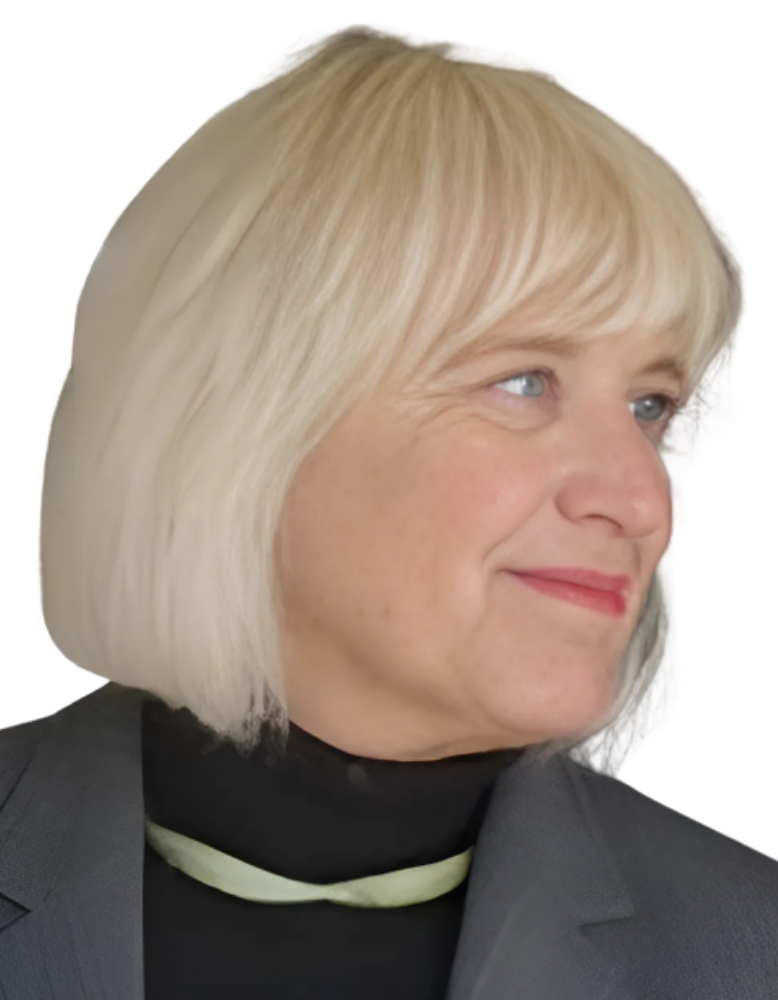
Lynn Sargent De Jonghe served as the founding Head of East Bay Sierra School, which merged to form Prospect Sierra School, and become one of the preeminent schools in the San Francisco Bay Area. Prior to this, Lynn spent fifteen years in public education administering federal funds to innovative programs, advocating for project learning as an alternative to textbooks, and pushing for integration in Massachusetts. She received a BA from Harvard University and an MS in Library Science from Simmons College before completing her PhD in Education at Cornell University. Throughout her career, she has pushed for challenging educational programs that encourage all students to pursue learning in depth and to use problem solving skills, collaborative learning, and exploration of values in an integrated curriculum. In 2022 Lynn’s book, Starting with Whitehead: Raising Children to Thrive in Treacherous Times, was published by Rowman & Littlefield. Her most recent book, Living Whitehead’s Vision: The Adventure of Adult Learning, was published by Process Century Press in 2026.

May Hartness is a Tennessean who’s grateful to Massachusetts for allowing her to take up residence. After earning her BA from Lipscomb University’s College of Leadership and Public Service in Nashville (’21), May moved north in pursuit of a land with less humidity and her master’s degree in theological studies. What she found when she arrived at the Boston University School of Theology (STH) was not only an opportunity to engage the entanglement between theological scholarship and the literary imagination, but a community that encouraged her to do so. After graduating (’24), May wanted to contribute a similar support to this community; she now serves as the STH Contextual Education Officer and has the privilege of working with students discerning questions of vocation. Not quite ready to give up her own student title, May is also in her second year of the Master of Fine Arts program at Emerson College where she studies creative nonfiction writing, volunteers as a reader for Ploughshares literary journal, and serves as a teaching assistant for the Emerson Prison Initiative.