



Book Launch | Organic Materialism and Philosophy of Technology: On the Speculative Relationship between Thought and Matter
Partner Event
Event Type:
- Dialogue, Presentation
- (Hybrid)
Featuring:
- Kamila Kwapińska, Wahida Khandker, Ben Turner, and Lydia Cole
Organizers:
- Sussex Centre for Global Insecurities Research (CGI)
Venue:
- University of Sussex
This book launch event will feature a brief presentation by the author outlining the book’s main argument, followed by a discussion with invited discussants and a Q&A session.
Organic Materialism and Philosophy of Technology: On the Speculative Relationship between Thought and Matter explores how process philosophy of nature (based on the works of A. N. Whitehead and F. W. J. Schelling) can address the questions of technology. This book demonstrates how the totalization of mechanistic materialism is inherent to global capitalism and how this totalization, coupled with techno-theism (the belief that technology will save us as a universal political project) and growth-mania (the belief in economic growth as a remedy to all socio-political issues), leads to the exhaustion of mind and nature. This book is an extensive examination of how the conceptualization of the relationship between thought and matter is at the core of philosophies of nature, philosophies of technology, and theories of political economy, and of the reasons why we must urgently rethink this relationship. Kamila Kwapińska argues that we must dig deep into our intellectual habits to enable noo- and bio-diversity and resist the totalizing tendencies of global capitalism. The book calls for the diversification of methods in social sciences, and the incorporation of process perspectives, to deal with the fact that orthodox ontologies and methods have failed to predict and manage consecutive economic and socio-political crises.
Featuring

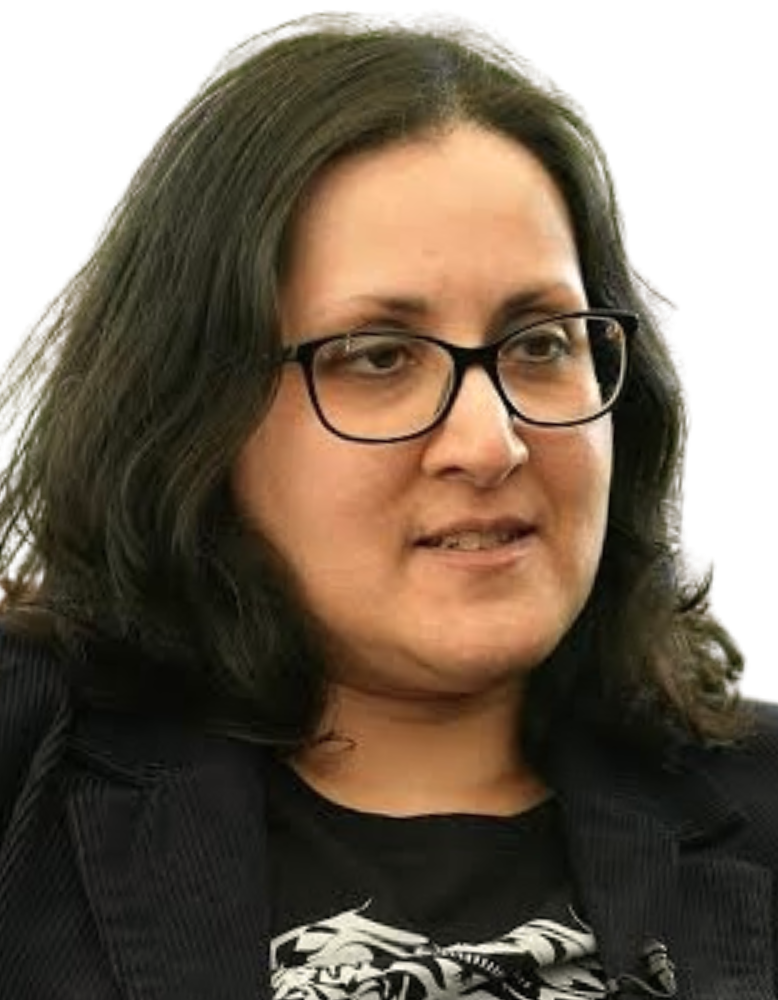
Dr. Wahida Khandker is a Senior Lecturer at Manchester Metropolitan University. Her research spans process philosophy, critical animal studies, the philosophy of biology, and arts methodologies, including the digital/visual arts/games. She is the author of two monographs, Philosophy, Animality, and the Life Sciences (2014) and Process Metaphysics and Mutative Life (2020), and her next monograph, Re-imagining Space, Time, and the Environment in Recent Continental Thought (Palgrave Macmillan, forthcoming 2026) engages in a rethinking of the environment, building on Pierre Teilhard de Chardin’s portrayal of the Earth as a ‘dimensional milieu,’ in which life cycles, evolution, and geological change better characterise the Earth than more fixed concepts of ‘land’, ‘territory’, ‘natural resource’ for consumption with limited ‘carrying capacity’, or ‘living space’ (Lebensraum). The book examines this, at times, problematic history and proposes alternative possibilities in the development of environmentalist thinking in recent Continental thought and the Environmental Humanities. She is a Co-editor of the book series, Palgrave Perspectives on Process Philosophy, and serves as Co-Chair of the Society for European Philosophy.

Dr. Ben Turner is a Lecturer in Political Theory at Queen Mary University of London. He is currently working on questions relating to the political nature of work. In a project funded by the Leverhulme Trust, ‘Imagining Life Beyond Work: Post-Work as a Tradition of Political Thought,’ he is investigating the extent to which post-work thought represents a distinct tradition that breaks with existing understandings of work in political theory. Before joining Queen Mary, he worked at the University of Kent, where he also completed his PhD. His doctoral research focused on the relationship between technology and judgement in the work of Bernard Stiegler, which was the subject of his first book: Returning to Judgement: Bernard Stiegler and Continental Political Theory. More widely, his research interests cut across the politics and philosophy of technology, the political theory of work and post-work, and the conditions of political judgement. Whilst his work is primarily within continental political theory, he actively looks for ways to think about and push beyond its limits by drawing on material from anthropology, analytical political theory and philosophy, social epistemology, and empirically informed political theory.

Venue

University of Sussex
About University of Sussex
The University of Sussex is a public research university located in Falmer, East Sussex, England. It lies mostly within the city boundaries of Brighton and Hove. Its large campus site is surrounded by the South Downs National Park, and provides convenient access to central Brighton 5.5 kilometres away.