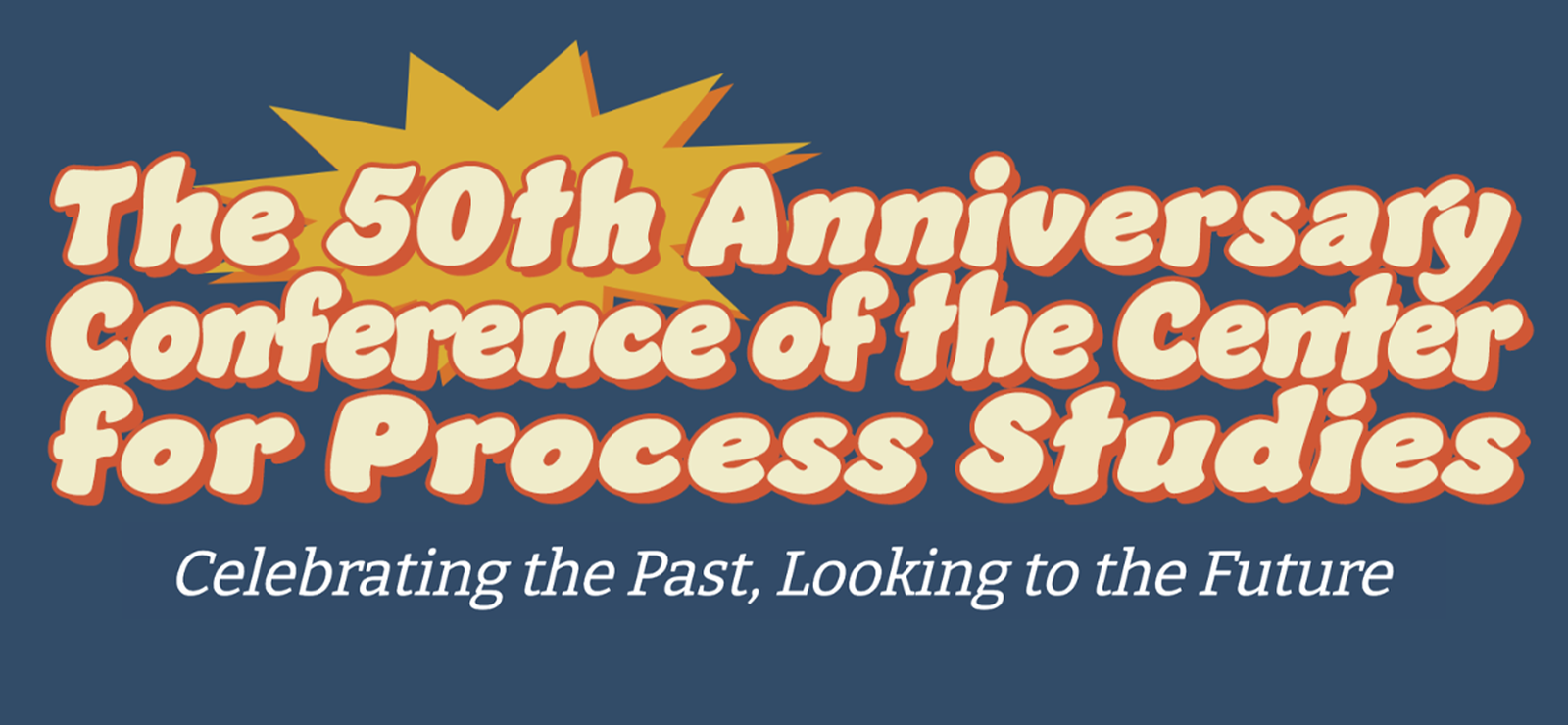
Founded in 1973 by John B. Cobb Jr. and David Ray Griffin, The Center for Process Studies (CPS) is coming upon its 50-year anniversary as a faculty research center of Claremont School of Theology. Under the leadership of Cobb and Griffin, CPS earned a global reputation as the southern California hub for the study of process philosophy and theology. Through rigorous research, cutting-edge conferences, and academic publications, Cobb and Griffin enacted the mission of CPS to facilitate the development, relevance and application of Whitehead’s philosophy across disciplines. The continued leadership by subsequent co-directors Marjorie Suchocki (1990), Philip Clayton (2003), Roland Faber (2006), Monica Coleman (2008) and others, built upon the foundations of Cobb and Griffin and continued to lead CPS into new generations of research and relevance. Now led by executive director Wm. Andrew Schwartz (2013) and program director Andrew M. Davis (2020), CPS enters its 50th year indebted to the contributions of the past, but looking toward the novelty of the future.
Co-sponsored by the Cobb Institute, the Institute for Ecological Civilization, and the Institute for the Postmodern Development of China, the “50th Anniversary Conference of the Center for Process Studies” celebrates the 50-year legacy of CPS and its creative transformation in the context of a new generation of process thinkers. Three core layers of investigation, each with four respective sessions, are proposed in light of this purpose:
Reenchanting Religion: Process Theology in the 21st Century (Feb 15th)
Divinity Reimagined
What is novel in the explication and/or reception of a process doctrine (or model) of God over and against its alternatives? Where are challenges and opportunities arising in current debates and conversations?
Religious Experience and Religious Belonging
What forms of religious experience, intuition and belonging are substantiated and/or produced from within process theology as creatively expressed across ecclesial settings? What does process theology/spirituality look like when lived out communally?
Panpsychism and Religious Naturalism
In what ways are process conceptions of panpsychism (or panexperientialism) relevant to the re-formulation of central Christian doctrines e.g., creation, Christology and divine action? What is the relationship between panpsychism and affirmations of religious naturalism?
Beyond Dialogue and Deep Religious Pluralism
Where are new connections being made between process theology and different religious systems and thinkers? In what ways is process theology informing new discussions of religious pluralism and multiplicity?
Watch the Recordings
Reenchanting Religion
Divinity Reimagined
Religious Experience and Religious Belonging
Beyond Dialogue and Deep Religious Pluralism
Panpsychism and Religious Naturalism
Science and Philosophy: Nature and the Nature of Reality (Feb 16th)
Facts, Values and Possibilities
How does process thought understand the relationship between facts, values and possibilities as variously expressed from physics to metaphysics? In what ways does process philosophy offer an interpretive metaphysics for the findings of physics?
New Materialism, Poststructuralism, and Process Philosophy
Where do points of connection lie between process philosophy, new materialism and poststructuralism? What new voices/insights are being integrated and what interdisciplinary insights are emerging?
Brains, Souls and Self
What new contributions is process thought making to related concerns and questions in neurology, psychology and psychiatry? Where have advances been made with respect to the brain, the mind-body problem, personal identity and the self, and personality growth and transformation?
Art, Beauty and Creativity
In what ways does process philosophy inform aesthetic experience, theory, and expression? Where are new developments and connections being made across artistic disciplines?
Watch the Recordings
Science and Philosophy
Facts, Values and Possibilities
New Materialism, Poststructuralism, and Process Philosophy
Brains, Souls and Self
Art, Beauty and Creativity
Process in Practice: Society, Sustainability and Ecological Civilization (Feb 17th)
Economies and Communities for the Common Good
In what ways is process thought informing and/or critiquing economic theories, policies and measures? What practical revisions are being proposed and where? To what end are these revisions sought and for which communities?
Power, Peace and Politics
What resources does process thought sustain in attempts to remedy deepening bifurcations across politics, society, and culture? What extremes does process thought seek to avoid in political theory, governance, and power? How is peace possible given the dysfunctional entanglement of power and politics?
Process Philosophy and Education
How is process philosophy informing and/or transforming educational theory and practice? Where do theoretical and practical weaknesses lie from grade-school to university settings and beyond? How is process philosophy responding to the crises in education?
Environmental Ethics and Ecological Civilization
What theoretical and practical ethical measures does process thought support and/or justify in light of the ecological crisis and the quest for an ecological civilization? What requires transformation in our relation to the environment and its human and non-human “others”?
Watch the Recordings
Process in Practice
Economies and Communities for the Common Good
Power, Peace and Politics
Process Philosophy and Education
Environmental Ethics and Ecological Civilization
It remains a truly exciting time for the global process movement with a new generation of scholars leading the way. This conference aims not only to celebrate the 50-year legacy of CPS, but also anticipate its continued relevance and creative transformation in the decades still ahead.
Conference Speakers
Reenchanting Religion: Process Theology in the 21st Century
Session 1: Divinity Reimagined
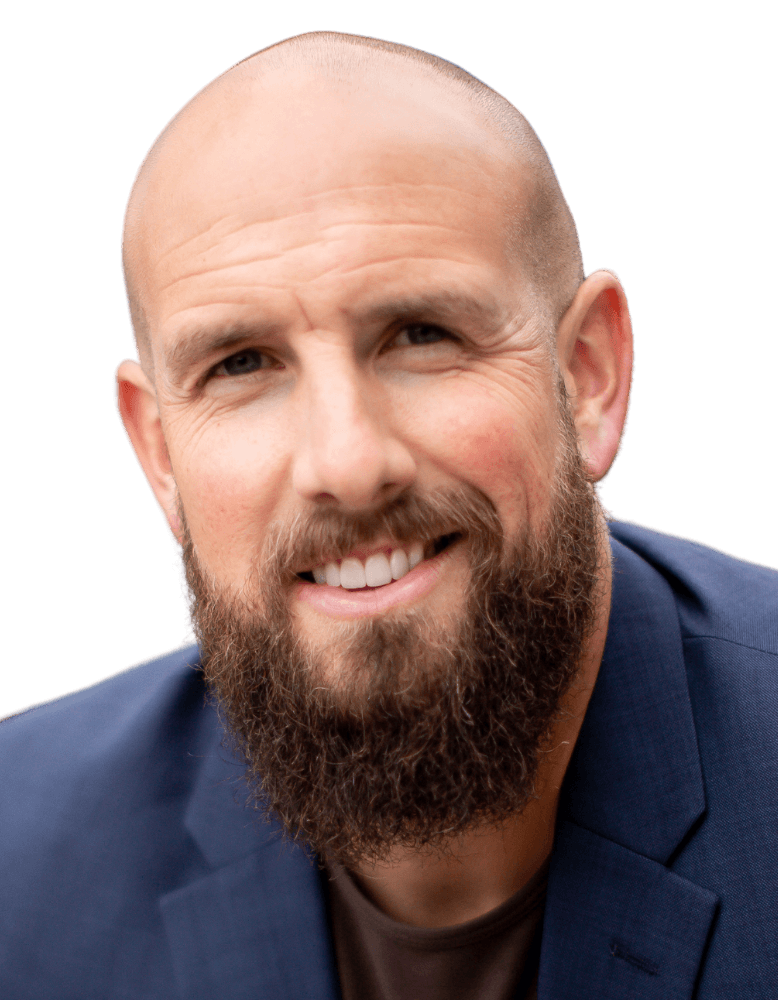
Dr. Andrew M. Davis is an American process philosopher, theologian, and scholar of the cosmos. He is Research and Academic Director for the Center for Process Studies, where he researches, writes, teaches, and organizes conferences on various aspects of process-relational thought. An advocate of metaphysics and meaning in a hospitable universe, he approaches philosophy as the endeavor to systematically think through what reality must be like—because we are a part of it. He is author, editor, and co-editor of nearly a dozen books, including Mind, Value, and Cosmos: On the Relational Nature of Ultimacy (2020); Process Cosmology: New Integrations in Science and Philosophy (2022); Metaphysics of Exo-Life: Toward a Constructive Whiteheadian Cosmotheology (2023); and Whitehead and Teilhard: From Organism to Omega (2025). His forthcoming book is a comprehensive yet conversational introduction to Alfred North Whitehead titled Whitehead’s Universe: A Prismatic Introduction. Follow his work at andrewmdavis.info.
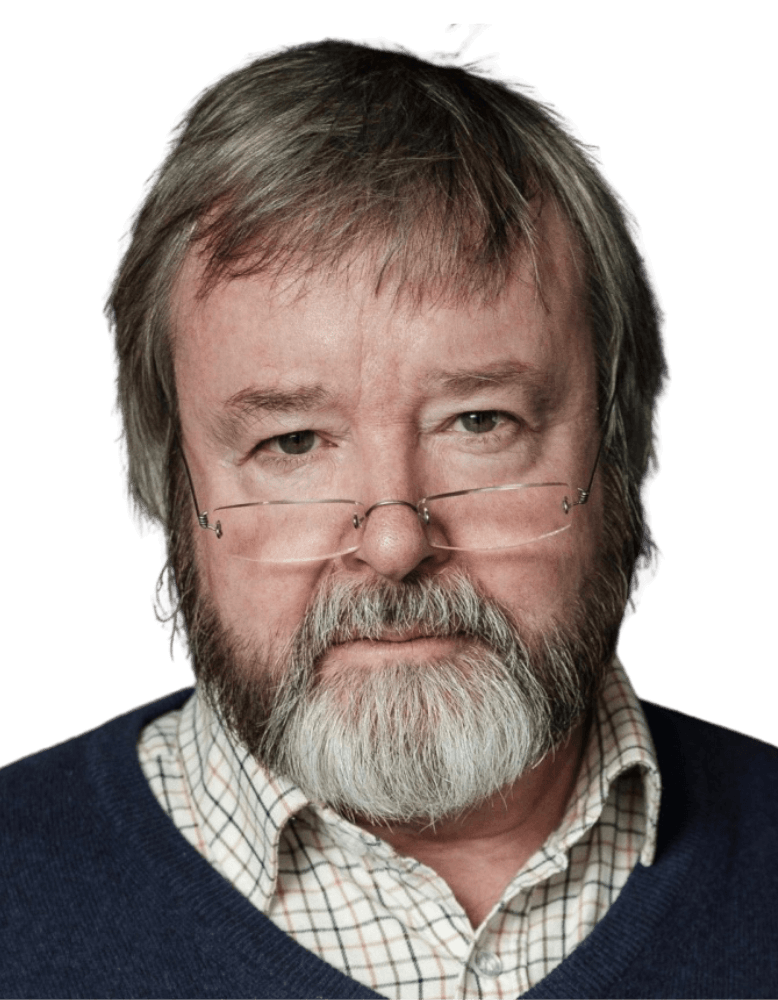
Dr. Iain McGilchrist is a Quondam Fellow of All Souls College, Oxford, an Associate Fellow of Green Templeton College, Oxford, a Fellow of the Royal College of Psychiatrists, a Fellow of the Royal Society of Arts, and former Consultant Psychiatrist and Clinical Director at the Bethlem Royal & Maudsley Hospital, London. He has been a Research Fellow in neuroimaging at Johns Hopkins Hospital, Baltimore and a Fellow of the Institute of Advanced Studies in Stellenbosch. He has published original articles and research papers in a wide range of publications on topics in literature, philosophy, medicine and psychiatry. He is the author of a number of books, but is best-known for The Master and his Emissary: The Divided Brain and the Making of the Western World (Yale 2009); and his book on neuroscience, epistemology and ontology called The Matter with Things: Our Brains, Our Delusions and the Unmaking of the World (Perspectiva 2021). Follow Iain at channelmcgilchrist.com
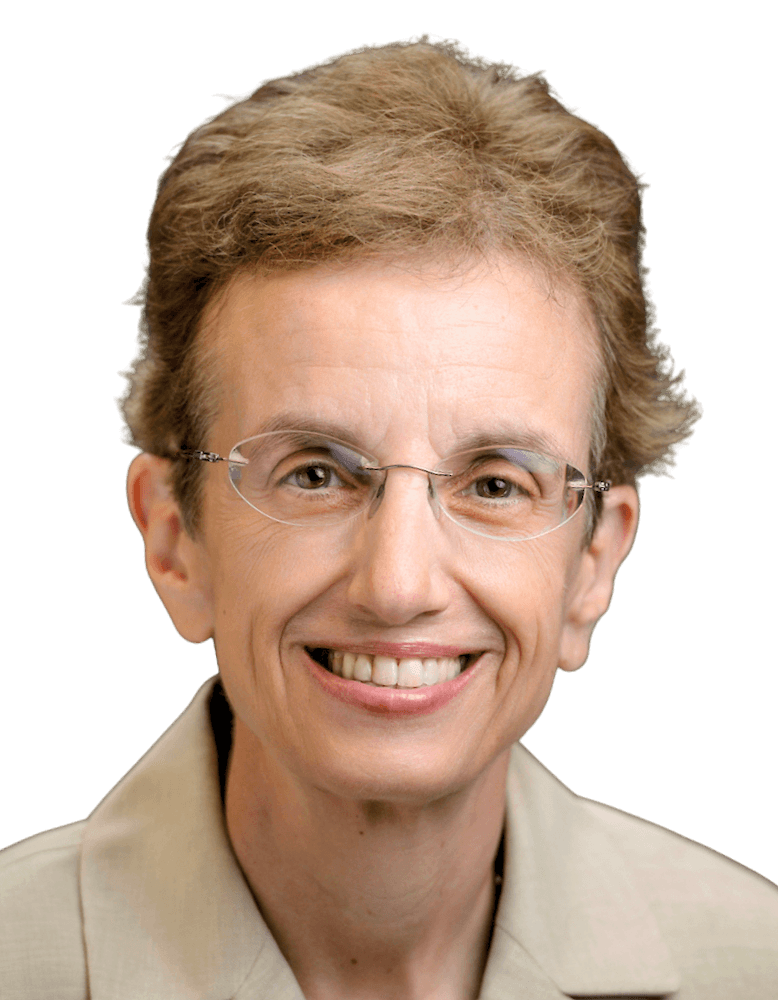
Ilia Delio, OSF is a Systematic-Constructive theologian who works at the interface of science, religion and culture. She holds a doctorate in Pharmacology from Rutgers University, Graduate School of Biomedical Sciences and a doctorate in Historical Theology from Fordham University. She is the author of twenty-six books including The Not-Yet God: Carl Jung, Teilhard de Chardin and the Relational Whole, The Hours of the Universe: Reflections on God, Science and the Human Journey which won the 2022 Gold Nautilus Book Award, and Making All Things New: Catholicity, Cosmology and Consciousness, a finalist for the 2019 Michael Ramsey Prize. She is founder and Executive Director of the World Institute for Science, Religion and Culture.
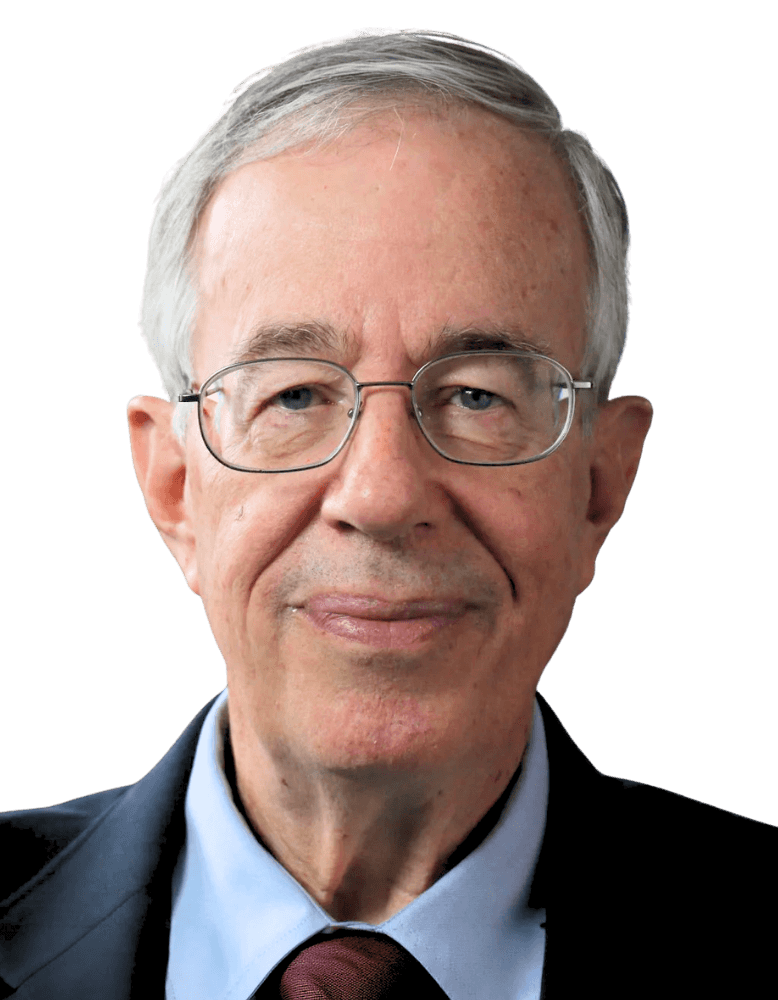
John Haught, PhD is Distinguished Research Professor at Georgetown University, where he taught in the Department of Theology from 1970 to 2005 and served as chair from 1990 to 1995. His field is systematic theology, with a particular interest in the questions that arise where science, cosmology, evolution, ecology, and religion meet. He is the author of 24 books, among them God After Einstein: What’s Really Going on in the Universe? (Yale University Press, 2022), The Cosmic Vision of Teilhard de Chardin (Orbis, 2021), and The New Cosmic Story: Inside Our Awakening Universe (Yale University Press, 2017). His writing emphasizes hope, depth, and the unfinished character of the universe, offering a vision that resists both reductionist materialism and anti-scientific retreat. Haught lectures internationally and has received the Owen Garrigan Award in Science and Religion, the Sophia Award for Theological Excellence, and an honorary doctorate from Louvain University in Belgium.