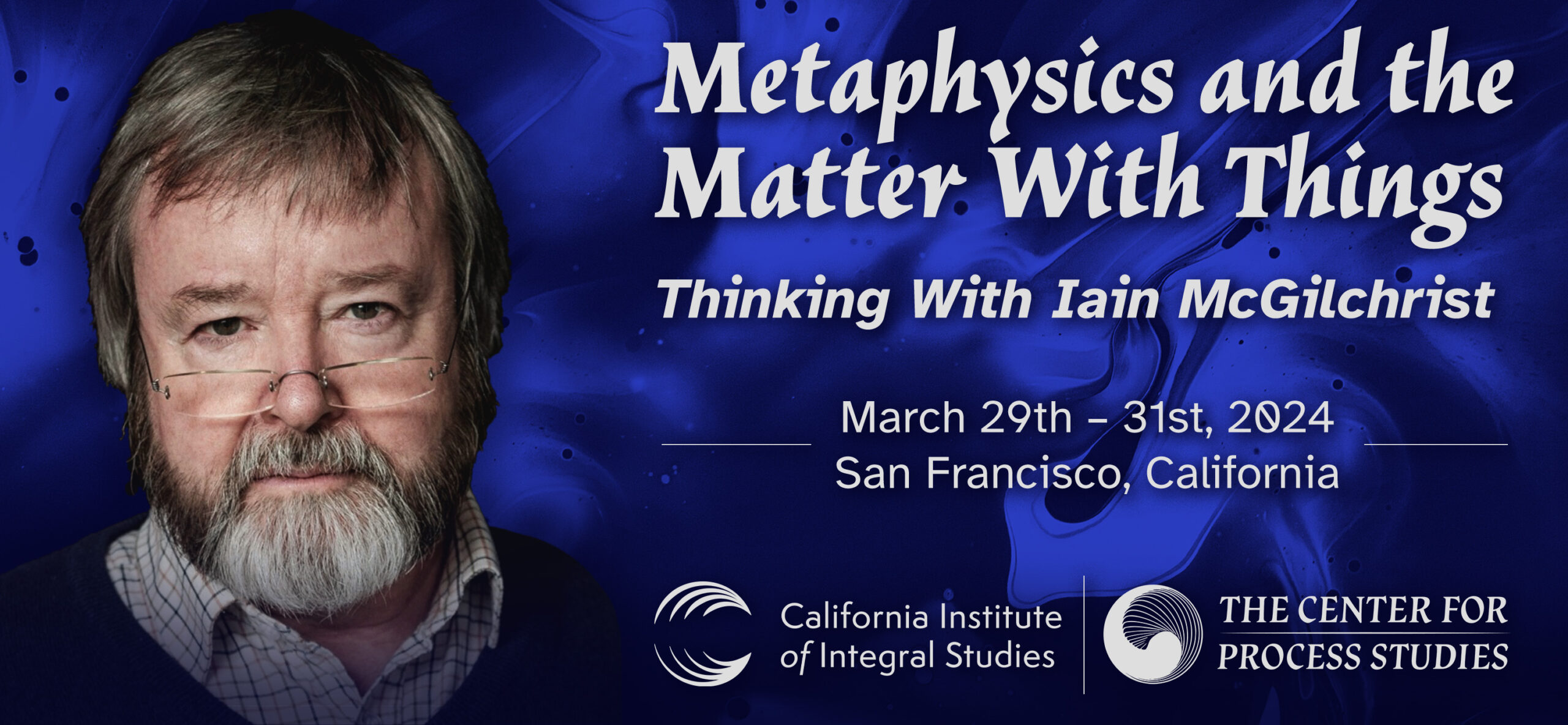
Iain McGilchrist’s recent magnum opus The Matter With Things (2021) constitutes one of the most significant contributions to the contemporary process tradition as revealed through layers of neuroscientific data and decades of remarkable clinical research into brain lateralization and the hemisphere hypothesis. Drawing from multiple scientific disciplines, and from both ancient and modern philosophers including Heraclitus, Schelling, James, Bergson, Whitehead, and others, McGilchrist has established himself as a formidable process thinker committed to reintegrating the holistic modes of thought associated with the right hemisphere as a guide to cultural renewal. As part of this effort, he affirms the ontological irreducibility of relationality, time, value, purpose, experience, consciousness, and the sacred. This conference brings leading process thinkers across various disciplines, including physics, neuroscience, psychology, philosophy, and theology into critical dialogue with McGilchrist’s work in a collegial effort to assess, question, extend, and apply it.
Subscribe to the Center for Process Studies Newsletter
Want to hear about future events from the Center for Process Studies? Subscribe to our monthly newsletter to stay in the loop and be the first to be notified when we announce a conference!
Conference Speakers
Keynote Lecture
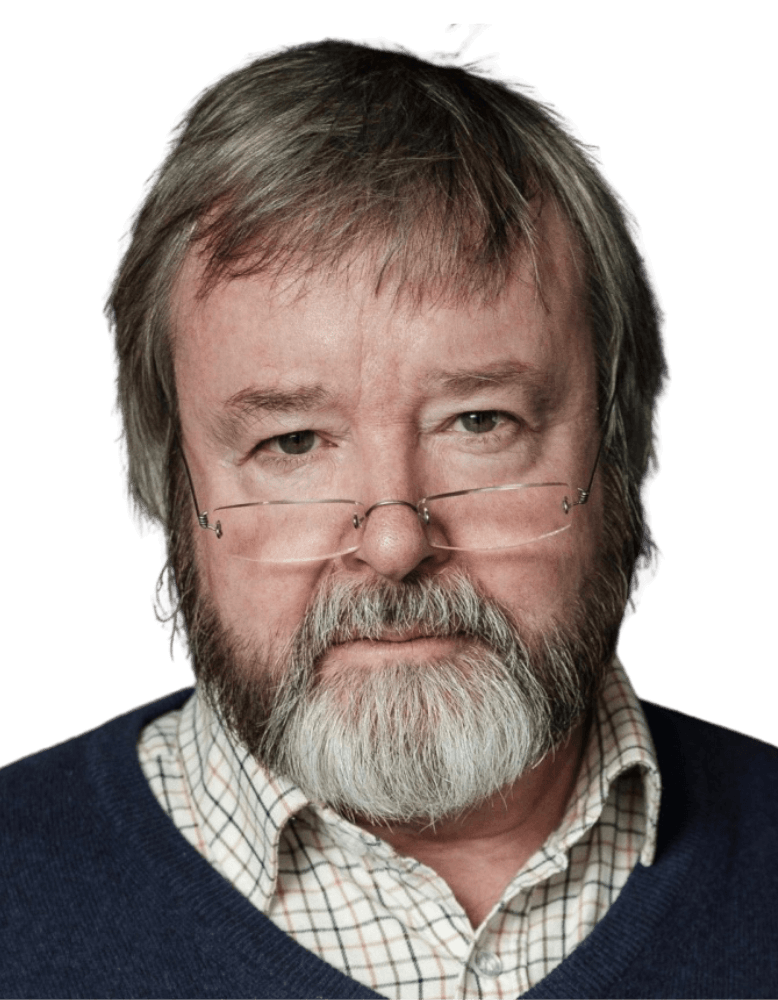
Dr. Iain McGilchrist is a Quondam Fellow of All Souls College, Oxford, an Associate Fellow of Green Templeton College, Oxford, a Fellow of the Royal College of Psychiatrists, a Fellow of the Royal Society of Arts, and former Consultant Psychiatrist and Clinical Director at the Bethlem Royal & Maudsley Hospital, London. He has been a Research Fellow in neuroimaging at Johns Hopkins Hospital, Baltimore and a Fellow of the Institute of Advanced Studies in Stellenbosch. He has published original articles and research papers in a wide range of publications on topics in literature, philosophy, medicine and psychiatry. He is the author of a number of books, but is best-known for The Master and his Emissary: The Divided Brain and the Making of the Western World (Yale 2009); and his book on neuroscience, epistemology and ontology called The Matter with Things: Our Brains, Our Delusions and the Unmaking of the World (Perspectiva 2021). Follow Iain at channelmcgilchrist.com
Session 1 | Neuroscience & Psychology
Dr. Alex Gómez-Marín (Barcelona, 1981) is a physicist turned neuroscientist investigating human consciousness in the real world. He holds a degree in physics, a masters in biophysics, and PhD in theoretical physics from the University of Barcelona, followed by two postdoctoral fellowships as a neuroscientist at the EMBL Center for Genomic Regulation and at the Champalimaud Center for the Unknown in Lisbon. For the last decade Alex has been a Principal Investigator at the Institute of Neurosciences in Alicante, Spain, and Director of the Behavior of Organisms Laboratory. He is currently a Senior Researcher there and an Associate Professor of the Spanish Research Council. He was director of the Pari Center from 2022 to 2025. In 2023 he was awarded the Linda O’Bryant research prize by the Institute of Noetic Sciences for his research on minds beyond brains. He is currently a member of the advisory board of the Dutch Brain Interface Initiative and of the Bamberg Mathematical Consciousness Science Initiative. He is also executive editor of Robert Kuhn’s the Landscape of Consciousness Website. Alex has published over a hundred articles in science journals, including Nature Neuroscience, Neuron and Science. He is also the author of The Science of the Last Threshold: a Journey to the Limits of Life, Death, and Consciousness, recently published in Spanish by Planeta.
The McGilchrist Gift and The Road Above
What is Iain McGilchrist trying to tell us with his Herculean writing efforts in The Master and His Emissary and The Matter with Things? I don’t think it is just a deluxe left-brain praise of the right-brain, as some would like to believe. It isn’t a spectacular display of reason arguing against itself either (although it is perfectly possible to use science and philosophy to show their own limits; one could even claim that that’s science and philosophy at their best). Iain’s work isn’t yet another theory-of-everything, nor an ideological push for the next hegemonic metaphysical “ism”. Continuously sustained for more than three decades, his magnificent project is a philosophical cosmology that offers no less than a deep understanding of the human condition and a timely revision of our current predicament.Iain has recently gifted us with a 591,000-word counter-spell to our civilizational demise. Transcending the urge for a prognosis that would defeat its very diagnosis, a great deal of the “potential energy” of his vision remains to be converted into “kinetic energy”. Regardless of the affirmation that his work may provide (or fail to provide) for some our favorite scientific theories, philosophical commitments, and habits of mind, I believe that the extraordinary opportunity that this gathering affords is to meditate on whether his entire corpus of work has some general importance in itself, so that we can see what it entails beyond itself. In other words, to ask: what’s Iain pointing at?Leaving mechanistic reductive materialism behind, we still have great challenges ahead. What about scientism, metaphysical dilettantism, wokeness, political correctness, confusion, collusion, war, and ultimately Evil? And what about Truth? What role are we, academics, playing in the unmaking of the world? Are we self-satisfied with our level of expertise? Is it working for us? Or are we seeking a transformative path as well, somewhat compromised by our intellectual investments?I will suggest that moving back into right-hemisphere dominance means not only to restore balance in the human being, but also constitutes a creative evolutionary advance of the kind identified as necessary and inevitable by Sri Aurobindo (whose marble bust I believe stands in the CIIS courtyard), whereby a holistic willing surrenders “separative knowledge” to attain “knowledge by direct contact” and even “knowledge by identity”, “the original and fundamental way of knowing, native to the occult self in things”, as the Indian philosopher put it in The Life Divine. If so, our horizontal hemispheric considerations become a hint to the vertical descent of truth-consciousness. Perhaps this venue is the sort of place where such a possibility can, at least, be introduced.
Michael Jacob, MD PhD is a neurobiologist and psychiatrist whose interdisciplinary work aims to develop new perspectives on how experience comes to life and how it unravels in mental illness. He is an Assistant Professor at UCSF, Director of the Psychosis and Metabolic Mental Health Clinics at the San Francisco VA, and Researcher with the non-profit, Human Energy. He leads an Interdisciplinary Neuroscience Research Group to foster collaborative studies of the brain, drawing from the humanities, semiotic and dynamical systems theories. His current experimental work at the Brain Imaging and EEG Lab (BIEEGL) at UCSF/SFVA employs multimodal neuroimaging methods to investigate reciprocal interactions between neural and metabolic signals. He is particularly interested in the implications of neuroscientific models and metaphors in society, including the biology of collective consciousness and the concept of the noosphere.
Getting to the Heart of What Matters in Neuroscience and Psychiatry
In this talk I will consider what the field of neuroscience might look like if the scientific process was guided by the philosophy of McGilchrist’s The Matter with Things. How would we study the brain? How would we approach psychiatry? I will focus on the wholeness and vulnerability of living organisms, their brains, and their capacity for getting to the heart of what matters.First, I will argue that the brain is alive in its own right, extending the embodied cognition perspective to include the metabolic vulnerability the brain shares with the body. This paradigm is examined through the lens of experimental neuroscience and neuroimaging, including the dynamic relationship between neural activity and metabolism. Our work explores the hypothesis that neural activity is inextricably entangled with metabolism, and this strange loop ‘tension’ reflects the dynamical feel of experience.Second, I will consider that the dynamics of neural activity can be understood as a global whole, a cross between an embryologic process and music. Brain activity does not convey literal meaning, like a piece of code, but instead, like Susanne Langer’s description of music, presents ‘global forms’ of feeling through a dynamic, unfolding process. Utilizing this perspective, we find evidence that the electrical activity of the brain contains a global core of dynamical regularity that, through the content of experience, differentiates into greater complexity.Last, I will examine the implications of the above neuroscientific metaphors for clinical psychiatry and the culture of “neurospeak.” Dominant, machine-oriented neurobiological models have a surprising negative influence on public perceptions of mental illness. Worse, this model has been extended to encompass the entirety of society, now seen as an integrated unit of machinations, virtual or otherwise. I close with a reflection on the role an organic philosophy of neuroscience might play in the evolution of larger societal (and cosmic) narratives.

What’s the Matter with Affect?
Affect makes emptiness matter.The intrinsically “distinct reverberatory neural patterns” of affective consciousness, as Jaak Panksepp explains in his landmark 1998 book Affective Neuroscience: The Foundations of Human and Animal Emotions and also in his essays on music, are linked to basic body tones and physical movements encoded within the “intrinsic affective potentials of the nervous system” (318).These encoded tones emerging are notes. The music, as Iain McGilchrist explains in The Matter With Things, exists “entirely between tones; and so, too, religion [which] exists in the betweenness of human beings.”The empty psycho-affective space of emergence investigated by Panksepp helps clarify what McGilchrist means when claiming “something far greater than the sum of its parts emerges” in the between—something has just emerged from no-thing.Panksepp investigates the emptiness between subjective feelings.By locating music in the “betweenness,” McGilchrist also ventures into an investigation of no-thing, but without acknowledging it.It is here in betweenness that, as Panksepp puts it, the primary genetically-dictated emotional operating systems like RAGE and FEAR and PANIC/GRIEF as a weak type of reverberation has the potential to become a “full-blown emotional state.”If this emotional state occurs—affect matters a lot. And the affect revealed is often trauma formerly concealed by the cognitive terms of Western thought.
Session 2 | Physics & Biology
The Mind of the Body: A Window into Embodiment and our Future

Ruth E. Kastner, PhD earned her MS in Physics and PhD in History and Philosophy of Science from the University of Maryland. Since that time, she has taught widely and conducted research in Foundations of Physics, particularly in interpretations of quantum theory. She was one of three winners of the 2021 Alumni Research Award at the University of Maryland, College Park. She is the author of 3 books: The Transactional Interpretation of Quantum Theory: The Reality of Possibility (Cambridge University Press, 2012; 2nd edition just published, 2022), Understanding Our Unseen Reality: Solving Quantum Riddles (Imperial College Press, 2015); and Adventures In Quantumland: Exploring Our Unseen Reality (World Scientific, 2019). She has presented talks and interviews throughout the world and in video recordings on the interpretational challenges of quantum theory, and has a blog at transactionalinterpretation.org
The Quantum Master and its Classical Emissary
Ian McGilchrist’s works, The Master and His Emissary and The Matter With Things, lay out and elaborate the thesis that the two hemispheres of the brain have radically different views of the world and ways of interacting with the world, and that their respective perceptions and functions must be properly integrated for a viable way forward. This proper integration requires restoring the right-brain to its proper place as “Master”. In this presentation, I discuss a parallel to this insight in the dichotomous “worlds” of quantum and classical physics. Specifically, the quantum level is the fundamental “Master” of physical reality, while the classical level is a secondary “Emissary” that arises under specific circumstances. The quantum level is pre-empirical and not directly available to the senses, while the classical level is empirically available. I note that the classical level of apparently concrete and separate phenomena corresponds to a left-brain type of understanding, while the quantum level, with its holism, indeterminacy, and nonlocality, corresponds to a right-brain type of understanding. Thus, the right brain is ‘tuned into’ the quantum level, while the left brain is only able to deal with the classical level. Since modern thinking is dominated by left-brain modes of thought—such as either/or categories, nominalism, and mechanistic conceptualization, the ’emissary’ is inappropriately in charge, and prevailing attempts to come to grips with quantum physics are hampered by left-brain prejudices. This leads to the current situation in which the classical level, and its either/or, mechanistic quality, is generally mistaken for the “true” reality. I argue that right-brain modes of understanding are needed in order to recognize the quantum level as the fundamental reality and to properly account for its manifestation at the classical, empirical level.
Timothy E. Eastman, PhD was a senior scientist at NASA’s Goddard Space Flight Center (retired) and has more than 40 years of experience in research and consulting in space physics, space science data systems, space weather, plasma applications, public outreach and education, and philosophy of science. Dr. Eastman’s interest in philosophy and philosophy of science extends over three decades with several journal publications in philosophy in addition to the SUNY volume. He is on International Advisory Boards for Process Studies and Studia Whiteheadiana (Poland), was lead editor of Physics and Speculative Philosophy (2016, DeGruyter Press). His latest book is Untying the Gordian Knot: Process, Reality, and Context (Lexington Books, 2020), which articulates a natural philosophy for the 21st century.
Going Beyond Things and Simplistic Dualities
Session 3 | Philosophy & Aesthetics

Carolyn Cooke, MFA is the author of a novel, Daughters of the Revolution, and two collections of short stories, The Bostons and Amor and Psycho. Winner of the PEN/Robert Bingham Award and a finalist for the PEN/Hemingway Award, her books have been named among the best of the year by The New York Times, the San Francisco Chronicle and The New Yorker. Her fiction and nonfiction have been published in AGNI, Best American Short Stories, The Nation, New California Writing, O. Henry Prize Stories, The Paris Review, and Ploughshares. She teaches in the Department of Interdisciplinary Arts and Writing (MFA) at CIIS. Her website is www.carolyncooke.com
In Defense of Fiction: Just Because It Didn’t Happen Doesn’t Mean It Isn’t True
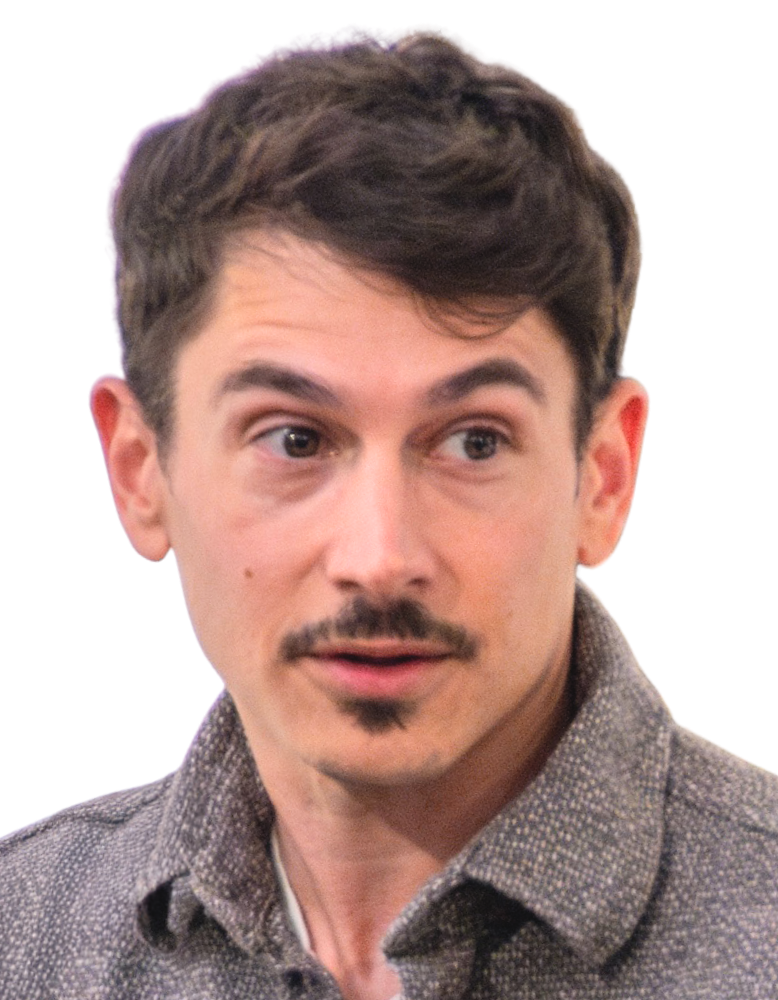
Dr. Matthew David Segall is the Director of the Process & Science Network, and a transdisciplinary researcher and teacher applying process philosophy across the natural and social sciences, including the study of consciousness. He is Assistant Professor in the Philosophy, Cosmology, and Consciousness Program at California Institute of Integral Studies in San Francisco, CA. Matt is author of Crossing the Threshold: Etheric Imagination in the Post-Kantian Process Philosophy of Schelling and Whitehead (Integral Imprint, 2023) and Physics of the World-Soul: Alfred North Whitehead’s Adventure in Cosmology (SacraSage Press, 2021). Follow his work at Footnotes2Plato.com
In Defense of Truth as Participation: McGilchrist’s Wager and Whitehead’s Theory of Propositions
My presentation aims to compare Alfred North Whitehead’s process-relational approach to Truth with Iain McGilchrist’s study of the portals and paths to truthful experience permitted us by our divided brains. Both thinkers reject positivistic and rigidly logical “either/or” definitions of Truth, instead reimagining what it means to know anything truly in the context of an unfinished universe imbued with divine creativity. Whitehead considers the scientific pursuit of Truth to be a variant form of religious worship, while McGilchrist proposes a third option to Pascal’s wager, suggesting that our attitude toward the possibility of divine existence impacts its truth or falsity. In Whitehead’s process-relational ontology, the cosmos is evolving and open-ended, with human beings and God involved in a reciprocal cocreative process. Truth is understood to depend upon the partial experiences of many creatures finding unifying expression within the evolving divine nature. McGilchrist’s approach adds that if reality is evolving and participatory, it’s rational to comport ourselves toward the possibility of divinity so as to actualize it more fully.My presentation will introduce Whitehead’s metaphysical theories of perception and propositions, comparing them to McGilchrist’s neurological account of human experience and its philosophical implications. I argue that Whitehead’s emphasis on knowing as a function of symbolic imagination and theory of propositions as “lures for feeling” aligns with McGilchrist’s view that the right hemisphere’s intuitive, metaphoric, relational form of consciousness is superior to the binary, decontextualized, abstract form of the left’s. Both thinkers will thereby be shown to converge in their understanding of Truth as a participatory event.
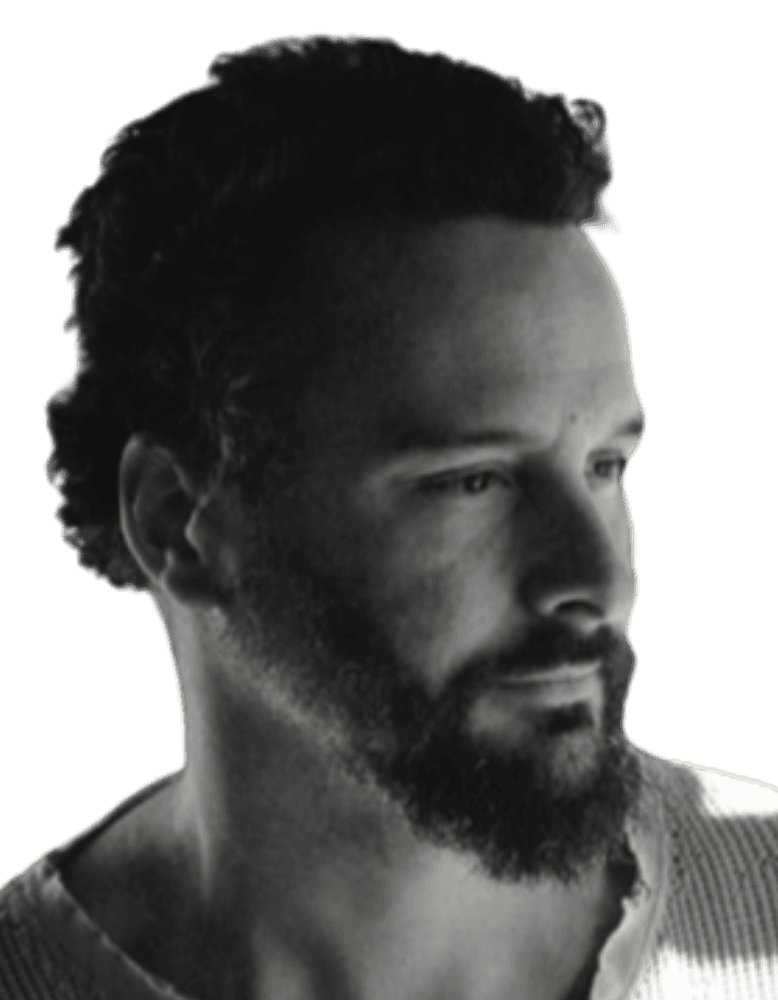
Zak Stein, PhD is philosopher and psychologist, and author of two books, including Education in a Time Between Worlds. Zak studied philosophy and religion at Hampshire College, and then educational neuroscience, human development, and the philosophy of education at Harvard University. While a student at Harvard, he co-founded what would become Lectica, Inc., a non-profit dedicated to the research-based, justice-oriented reform of large-scale standardized testing in K-12, higher-education, and business. He is also a co-founder of the Center for World Philosophy and Religion and a co-founder of the Civilization Research Institute.
Opening the Eye of Value During the Meta-Crisis: The Existential Imperative Cultivating Value-ception
David J. Temple has argued that the collapse of value at the heart of global culture is the root cause of proliferating Global Catastrophic and Existential Risks. Exploring the truth of this suggests that radical educational innovation is needed to (re)align humans with the Universal Field of Cosmic Value. Essential to the survival of humanity is the cultivation of “value-ception”—the capacity to engage the “eye of value”—the human (right-hemispheric) ability to perceive intrinsic value. The question of what kinds of capacities are needed for humanity to navigate planetary meta-crisis reframes the philosophy of education implicit within McGilchrist’s hemisphere hypothesis. Concrete recommendations and ongoing projects are discussed, in the context of the imminent planetary catastrophe, driven in large part by the incapacitation—the blinding—of the eye of value.
Session 4 | Spirituality & the Sacred

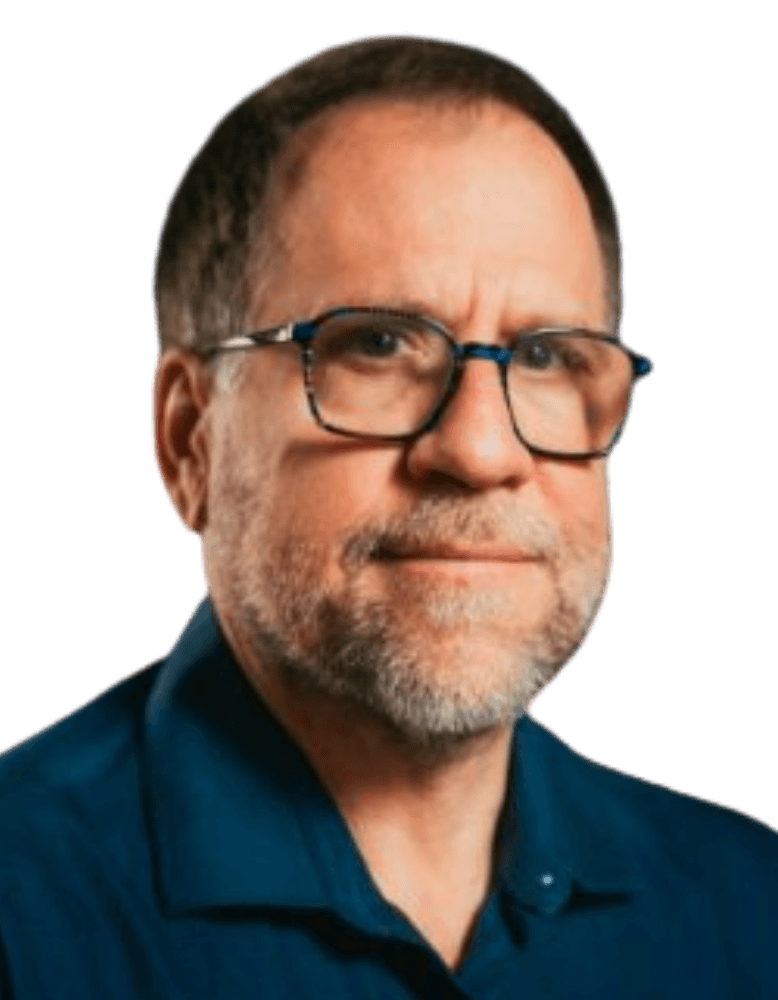
Dr. Andrew M. Davis is an American process philosopher, theologian, and scholar of the cosmos. He is Research and Academic Director for the Center for Process Studies, where he researches, writes, teaches, and organizes conferences on various aspects of process-relational thought. An advocate of metaphysics and meaning in a hospitable universe, he approaches philosophy as the endeavor to systematically think through what reality must be like—because we are a part of it. He is author, editor, and co-editor of nearly a dozen books, including Mind, Value, and Cosmos: On the Relational Nature of Ultimacy (2020); Process Cosmology: New Integrations in Science and Philosophy (2022); Metaphysics of Exo-Life: Toward a Constructive Whiteheadian Cosmotheology (2023); and Whitehead and Teilhard: From Organism to Omega (2025). His forthcoming book is a comprehensive yet conversational introduction to Alfred North Whitehead titled Whitehead’s Universe: A Prismatic Introduction. Follow his work at andrewmdavis.info.
Axiological Asymmetry and the Reason for Being: McGilchrist and the Mystery of Existence (in Five Propositions)
The Metaphysics of Mattering
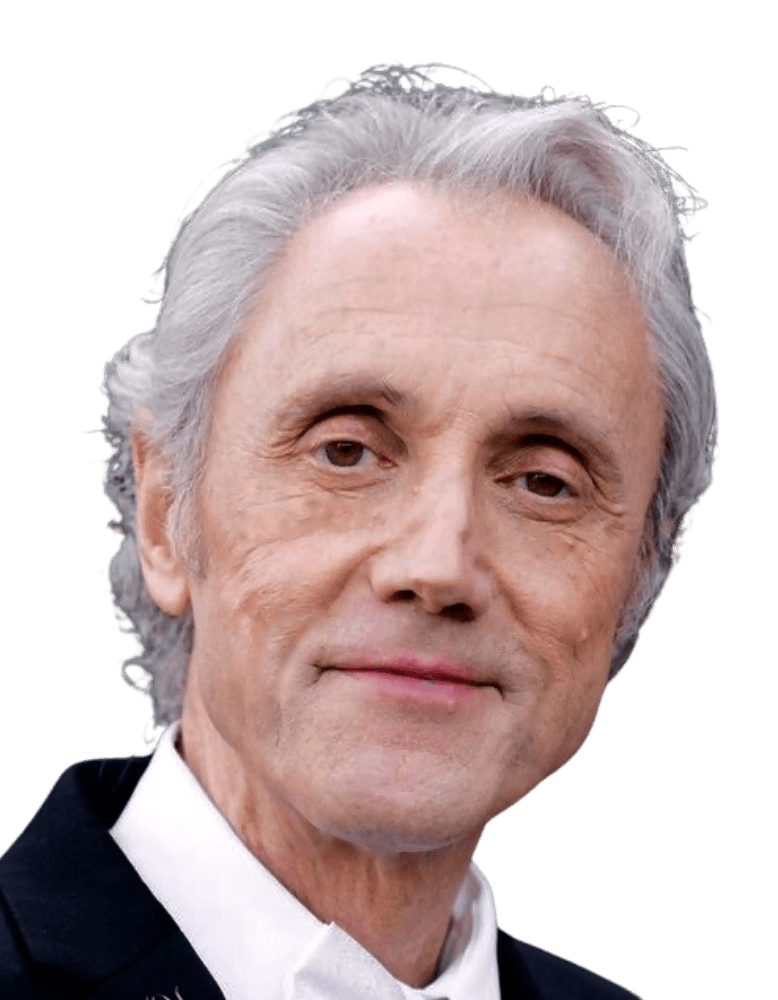
Richard Tarnas, PhD is the founding director of the graduate program in Philosophy, Cosmology, and Consciousness at CIIS. He teaches courses in cultural history, archetypal studies, depth psychology, philosophy, and religious evolution. Formerly the director of programs and education at Esalen Institute in Big Sur, he is a graduate of Harvard University (AB 1972) and Saybrook Institute (PhD, 1976). He is the author of The Passion of the Western Mind, a history of the Western world view from the ancient Greek to the postmodern widely used in universities. His second book, Cosmos and Psyche: Intimations of a New World View, received the Book of the Year Prize from the Scientific and Medical Network, and is the basis for the documentary film Changing of the Gods. He is a past president of the International Transpersonal Association and served on the Board of Governors for the C.G. Jung Institute of San Francisco.
Hemispheric Dominance and Desdemona’s Voice: Implications for the Evolution of Consciousness
Different epistemic stances shape different world views. In turn, different world views create different worlds. We could say that each era’s world view or governing framework of principles and assumptions is an evolutionary act of niche construction whereby a culture actively selects which features of the world it will rely on, thereby influencing the selection pressures it will face. But what is the effect on a civilization when, century after century, a major portion of its cognitive capacities and engagement with the world is systematically marginalized or negated by its dominant epistemic stance as being merely subjective in nature, with no affirmable purchase on reality itself? Beginning with Romanticism in the later eighteenth century, many critics of this dominance have emphasized the impoverishing consequences such a stance produces on our moral, spiritual, and aesthetic life. In our present age, however, it is clear these consequences have become life-and-death in nature, catastrophic for the entire Earth community. Have we, like Othello, tragically cut ourselves off from listening to the one voice, in his case Desdemona’s, that could radically correct and recontextualize the negative message, the reductionist world view, which we have till now accepted as the only truth, fatefully determining our collective beliefs and actions?And beyond this, an overarching philosophical question presents itself: If we affirm humanity’s aspirations to metaphysical and religious insight beyond reductionist parameters, and if we go so far as to affirm a vision of the world as essentially unitary, processive, and spiritually informed, how can we make sense of a divine creative process that has brought forth such an overwhelming multi-crisis as the one we face today? Or to put it in different terms, perhaps we need to grasp not simply how the emerging cosmological vision is more adequate than the old mechanistic paradigm, but rather why the cosmos—through the human, through the modern mind—brought forth the soulless modern universe in the first place. Why did the cosmos and the human being, in participatory co-creation, bring forth the immensely powerful reductionist vision, with all the modern dualisms of self and world, inner and outer, spirituality and objectivity? Why would the universe reveal itself to itself, through the modern mind, as purposeless and meaningless, unconscious, ruled only by chance and necessity? Why did it—we—bring forth not only the genuine achievements but also the dangerous disenchantment, disorientation, and alienation of late modernity? What, if any, deeper evolutionary and spiritual logic might be at work?
Co-organized by