
Unprecedented Evolution: Continuities and Discontinuities between Human and Animal Life and the Future of Humanity

- By Spyridon A. Koutroufinis and René Pikarski (editors)
- November 17, 2020
- Process Century Press
The authors of these essays examine core dimensions of the human condition in light of biophilosophy and process metaphysics, which they apply to such core anthropological issues as the survival of both the human species and the biosphere as a whole. With a general focus on the unique capacity for symbolization as marking an important and influential factor in human evolution, the authors address key issues in biophilosophy, such as the specific ways we differ from other species, our capacity to symbolize and create a helpful or dangerous distance from life, and our playfulness and proclivity for mythmaking. Questions addressed include the following:
How did symbolic thought shape the evolution of the human species?
How did symbolic systems shape human experience of and reasoning about space, time, matter, life, and natural processes?
How do our unique forms of power relations distinguish humans from other species?
How do our spiritual and metaphysical belief systems influence human rationality and morality?
How can we balance our spiritual needs with our rational abilities, and how could this influence our future evolution?
How should we respond to the trends towards transhumanism and bio-technocracy?
Our intellect is troubled by a consciousness of its own evolution, by the ecological and ethical challenges of a severely degraded environment, and it wields great symbolic and mythic fictions with the power to influence the bio-social evolution of future humans. Despite all our unique qualities, we cannot set ourselves apart from the natural heritage we share with every living being on planet Earth. Somewhere between transhumanism and cosmohumanism, we must find an ethical guide, an organismic and cosmic consciousness, and a speculative framework to manage our knowledge and our spontaneous actions towards the future.
- Get a Copy of Unprecedented Evolution: Continuities and Discontinuities between Human and Animal Life and the Future of Humanity
About the Author(s)
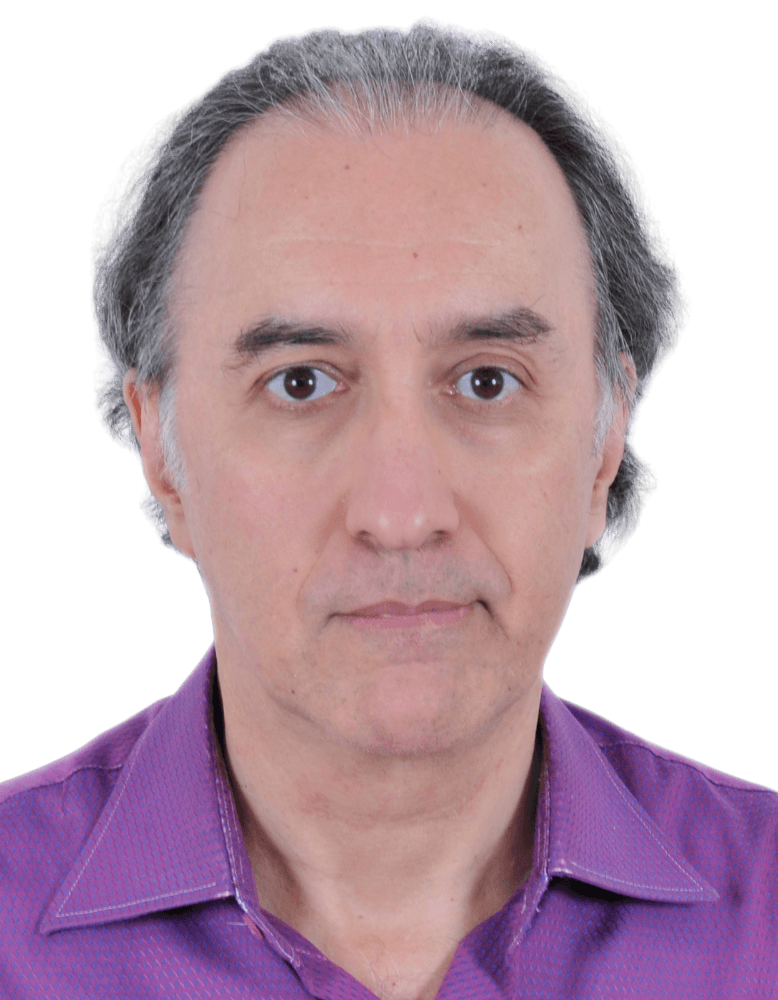
Spyridon A. Koutroufinis is a Privatdozent (Associate Professor by habilitation) at the Institute of Philosophy at the Technical University of Berlin, Germany. His primary areas of expertise are biophilosophy, process philosophy (Whitehead, Bergson, and others), the theory of self-organization in complex dynamical systems, and classical metaphysics (Aristotle, Leibniz). His research examines the philosophical foundations of biological form and process, drawing critically on systems theory and positively on process thought. Dr. Koutroufinis seeks to renew the theory of the organism through novel interpretations of the work of Canguilhem, Uexküll, Portmann, Jonas, Goldstein, and other biophilosophers and life scientists, inspired by the ontologies of Bergson and Whitehead. He has authored and edited numerous books, journal articles, and book chapters in these fields. His latest monograph, Organismus als Prozess (2019, Karl Alber), develops a process-ontological theory of ontogenetic and embryogenetic becoming. The book aims to synthesize contemporary systems theory with process thought, moving beyond twentieth-century process philosophy to address fundamental problems in modern systems-theoretical biology. Dr. Koutroufinis also investigates the concept of intuition in the history of philosophy and its renewal through process philosophy, while critically examining transhumanism and posthumanism.
More Books