
Physics, Information, and Meaning: How Nature Creates Complexity, Purpose, and Values
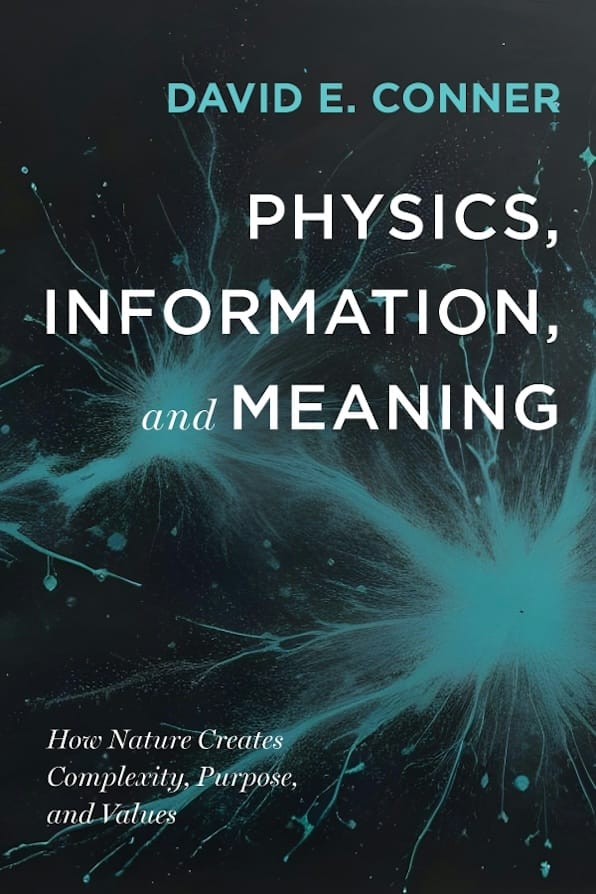
- By David E. Conner
- March 25, 2026
- Wipf and Stock
What is the essence of life? Human experience can be viewed as a series of choices, purposive activities, and emotional states. Even our most trivial actions are prompted by some goal. Our experience also includes emotions—joy, sadness, pleasure, anxiety, and so on. Even boredom is a type of emotion. But what is the meaning of all this? Those who know anything about science are likely familiar with the idea that reality is based ultimately on particles and physical forces. Modern scientific worldviews seem to offer no explanation for decisions, goals, feelings, and meanings.This book argues against the materialistic-mechanistic-reductionistic response to science. Physics itself—especially special relativity and quantum mechanics—can be interpreted in ways that support, rather than negate, humanity’s experience of choices, values, and meanings. The process philosophy of Alfred North Whitehead and others is introduced as a useful tool. However, Whitehead’s thought is presented not as a preexisting philosophy that is imported to the interpretation of science, but as a set of ideas that Whitehead derived from his own knowledge of relativity and quantum theory. The book’s final two chapters offer ideas about religion that are compatiblewith the worldview that has been described.
- Get a Copy of Physics, Information, and Meaning: How Nature Creates Complexity, Purpose, and Values
More Books