Events
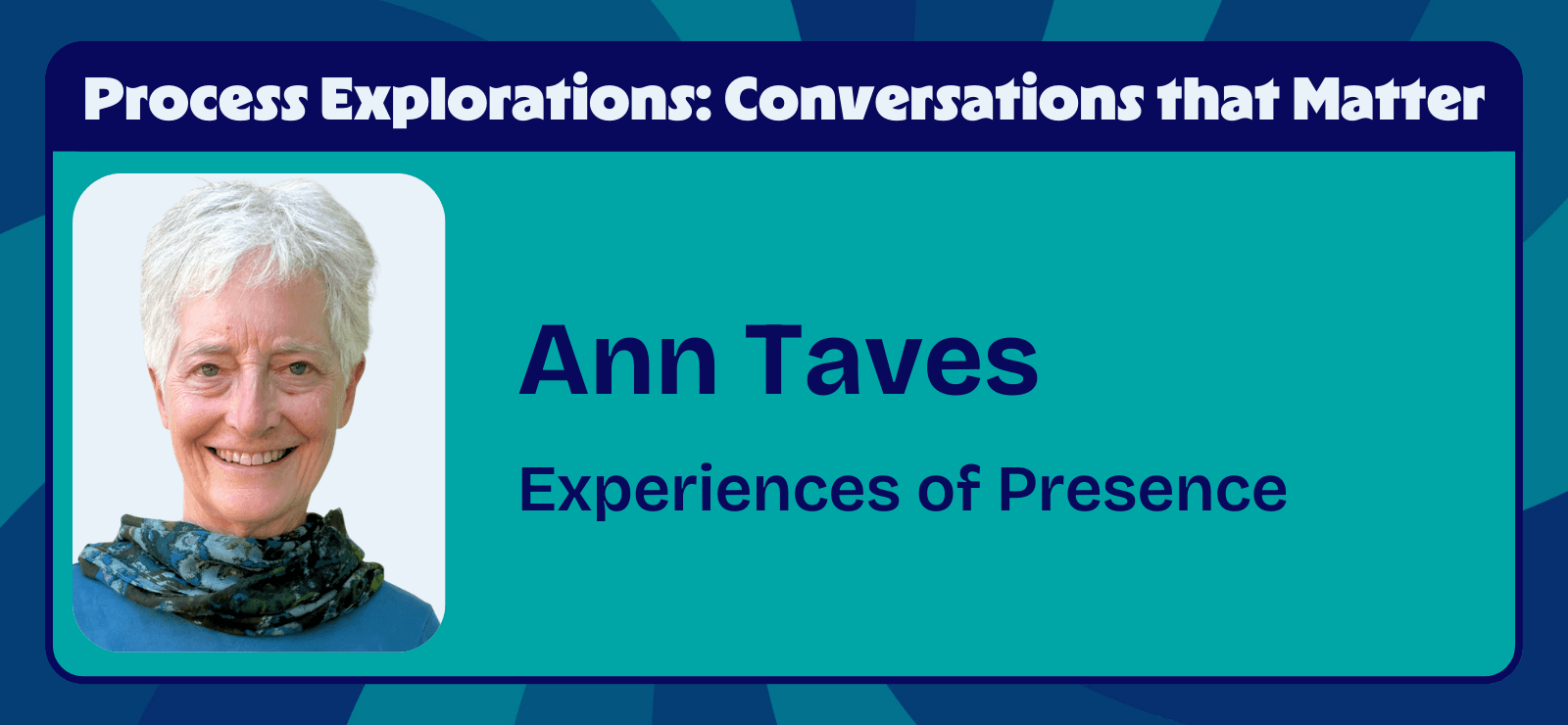
Experiences of Presence | Ann Taves
When people claim to have experienced the presence of a dead loved one, a deity, or other spiritual entity, the way they knew the presence was there can vary widely, regardless of who they thought was present. Some say that they just knew the presence was there. Others say they saw, heard, or felt the touch of the presence. Others explain that the entity signaled its presence by arousing unusual feelings or by causing unusual things to happen. As part of a research team that attempted to understand such experiences scientifically, Ann Taves and a collaborator developed a typology of presence experiences designed to enable researchers to distinguish the different types of experiences that they wanted to explain. In this talk, Taves will explain the typology using experiences drawn from her research to illustrate and discuss how considering experiences as events can help us to understand the factors that interact to produce experiences of known presences.
Free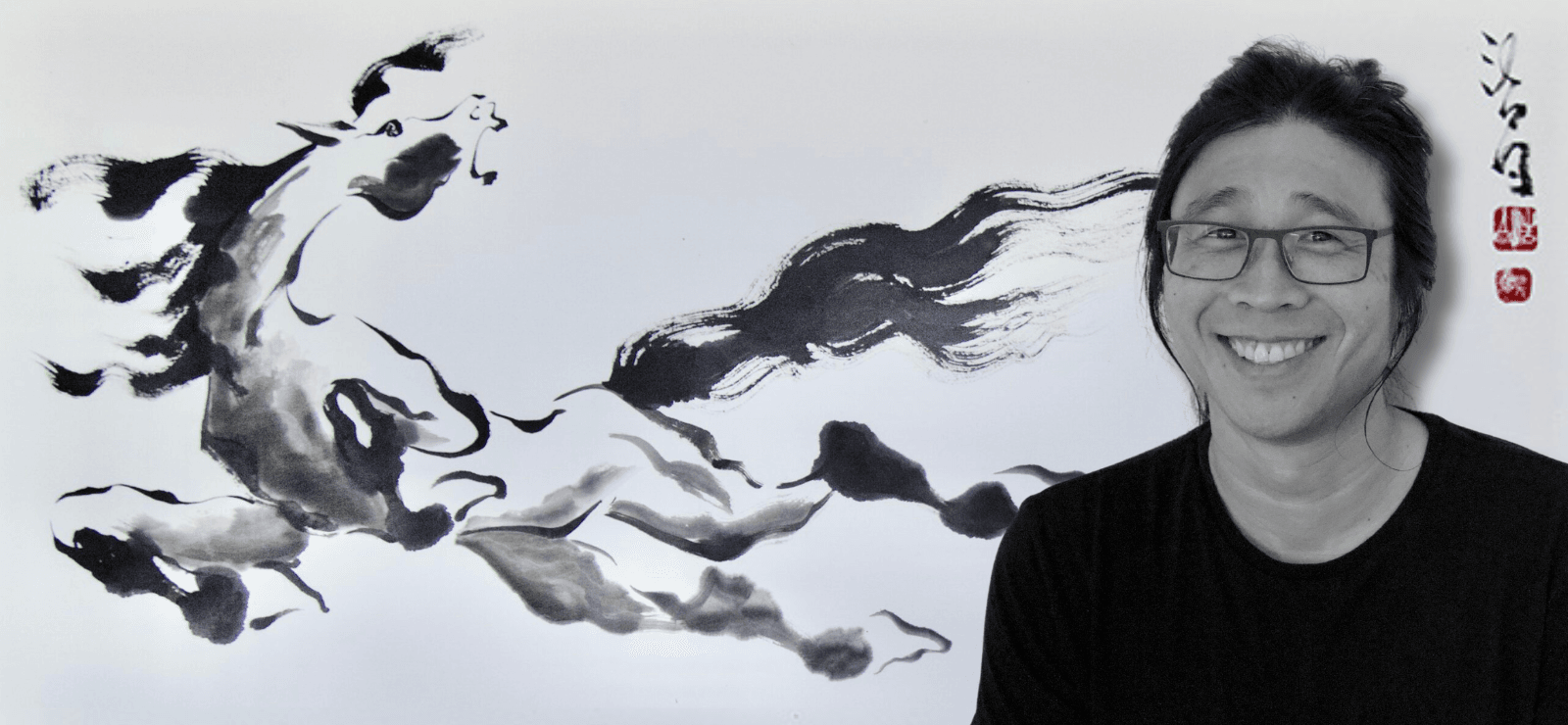
Splash Ink Painting and the Intimidation of Permanence | Kevin Yeh
In this SPARKS Exchange Kevin Yeh 葉浩白 will perform a live demonstration of the Yeh Splash Ink style and explore the concepts of perceived permanence and taking the first step in a journey. Kevin is a third-generation Chinese splash ink artist continuing a family lineage that began with his grandfather. The session will begin with Kevin's demonstration of horse painting, followed by an dialogue with Jared Morningstar to draw connections with process philosophy themes, and conclude with a participatory activity led by Kaeti MacNeil where attendees can breathe along with Kevin's brushstrokes.
Free
Ten Differences Between Traditional Systematic Theology and My Systematic Theology of Love | Thomas Jay Oord
The shift from theologies oriented around controlling power to one oriented around uncontrolling love radically reshapes what systematic theology can be. It centers experience in bold ways, and not just the experiences of white men. In this session, Thomas Jay Oord explores ten differences between his systematic theology of love and traditional systematic theologies.
Free
Mind-at-Large Project: A New Dawn
FeaturedThe inaugural conference of the Mind-at-Large Project will be held fully online from April 15–17, 2026, hosted by the Center for Process Studies. The conference program will feature plenary lectures from leading thinkers, emerging scholar presentations, panel dialogues across disciplines and structured opportunities for substantive exchange.
What’s Next? An Eartheology of All That Is | Catherine Keller
As the terrestrial trauma of global warming and US deregulation mounts, must we face ecological apocalypse? Ecological issues are routinely subordinated, even on the left, to pressing human concerns. Catherine Keller considers an apocalypse of dis/closure, not closure. Can the crisis itself crack open ways of greater collective attention to human and other-than-human wellbeing? How does theology, so often indifferent to the material world, help rather than hinder? Might we as Christians need a theology of God’s embodiment in all things—and particularly in the Earth? Not just in a one-off incarnation? The creation might then appear not as a one-time product but as ongoing and interdependent creativity. Does process theology help to motivate not only ecosocial virtue, but to materialize the creativity of love?
Free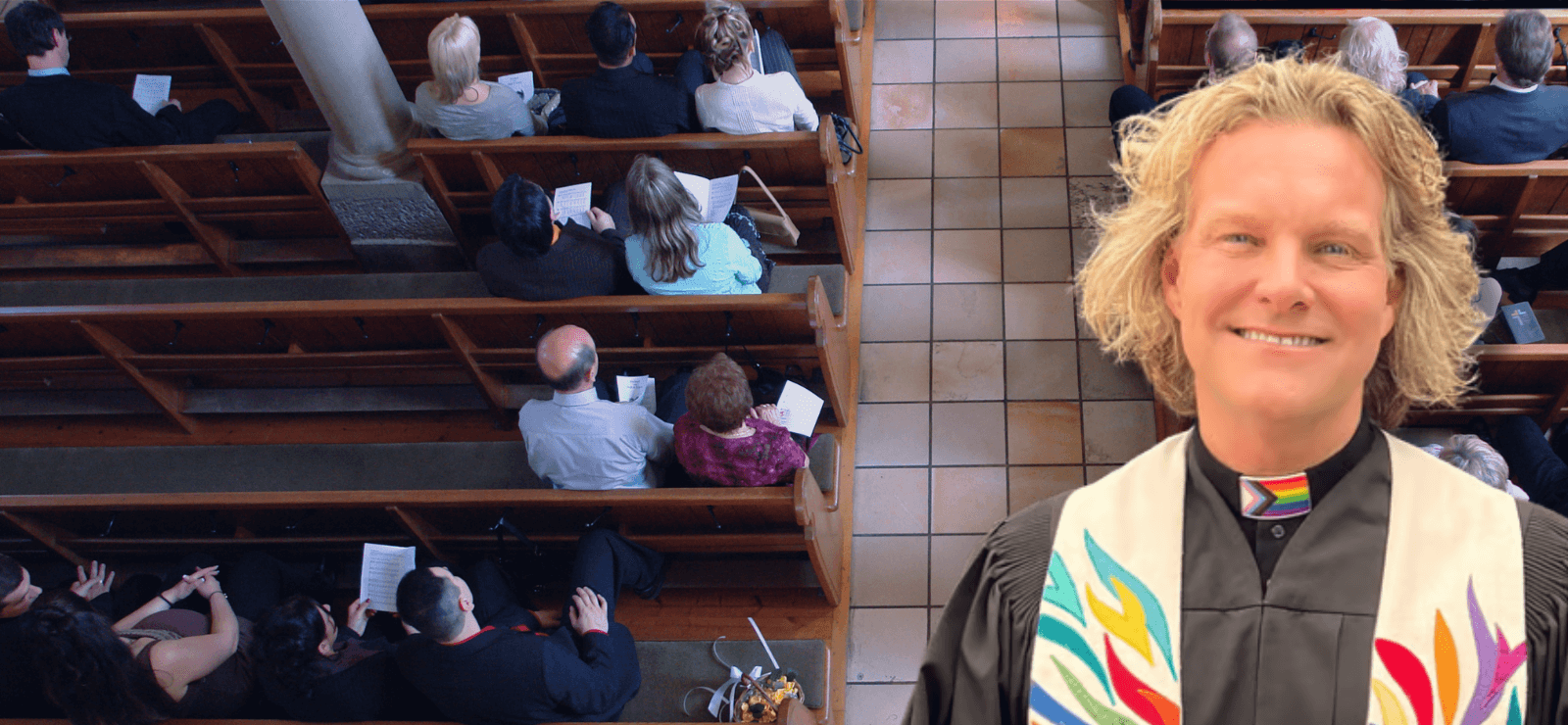
Process Pop-Up: Becoming Together: Immersing a Congregation in Process Theology
Ever wondered how to introduce process theology into your congregation? Join Pastor Brian Cromer for a process pop-up exploring a four-week journey that uses diverse practices, including participatory Bible study, storytelling circles, worship, and collaborative art, to immerse a community in core themes of process thought: God in relationship, becoming and change, persuasive love, and co-creation and transformation.
The Depths of the Sacred: How Process Mediates between ‘Believers’ and ‘Nonbelievers’ | Philip Clayton
Conversations with process thinkers from Process Explorations inspired Philip Clayton's most recent book, Science and the Sacred: Beyond the Gods in Our Image. Now, a year later, he returns to the group that inspired the book to reflect with you on lessons learned since its publication, and to hear your responses.
Free
From Orthodox Monasticism to Sufi Process Theology | Sa’id Abdul Latif
In this presentation, former Russian Orthodox priest-monk Sa’īd Abdul Latif (Troy Heagy) reflects on his journey from Eastern Christian monasticism to a form of process theology-informed Sufi Islam. He will explore his early understanding of faith and truth as adherence to correct dogma authoritatively defined by church, confession, or creed—the idea that one need only discover the right institution and submit to its formulations. He will then describe his gradual movement toward a more dynamic theological vision shaped by process thought and the metaphysical language of Ibn ʿArabī, particularly the doctrine of Wahdat al-Wujūd (“Unity of Being”).
Free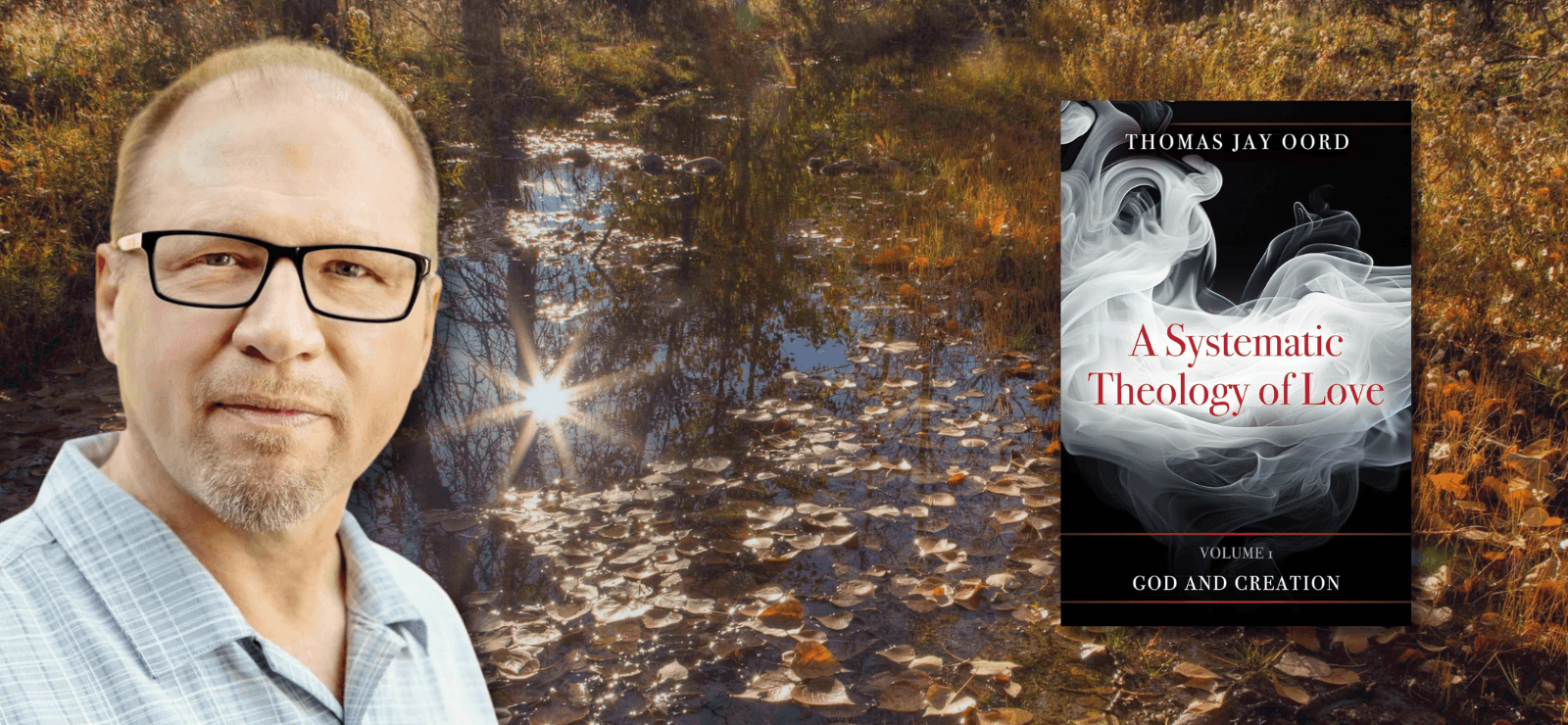
Process Pop-Up: A Systematic Theology of Love
Apparently, Thomas Jay Oord has written the first book with the title, A Systematic Theology of Love. Oord not only puts love at the center of this thinking about God and creation, this central emphasis changes the way he considers core themes about God and creation. In this pop-up, Oord talks about what differences love makes to a consistent theology.
Process Philosophy in Under-Explored Traditions in Philosophical History: An Online Conference
This conference will be the first to birth this long overdue intellectual exchange as it offers an improved metaphysical framework for value and consciousness in all ontological entities to address various concerns that are facing humanity: economy, political, and environmental. Although there are hesitant answers to some of these global challenges facing humanity, the influence of substance-based analysis has yet to offer penetrative answers, in addition to the almost complete lack of interaction among scholars of process to explore their common ground for a common voice in the way that substance thought has done over the centuries.
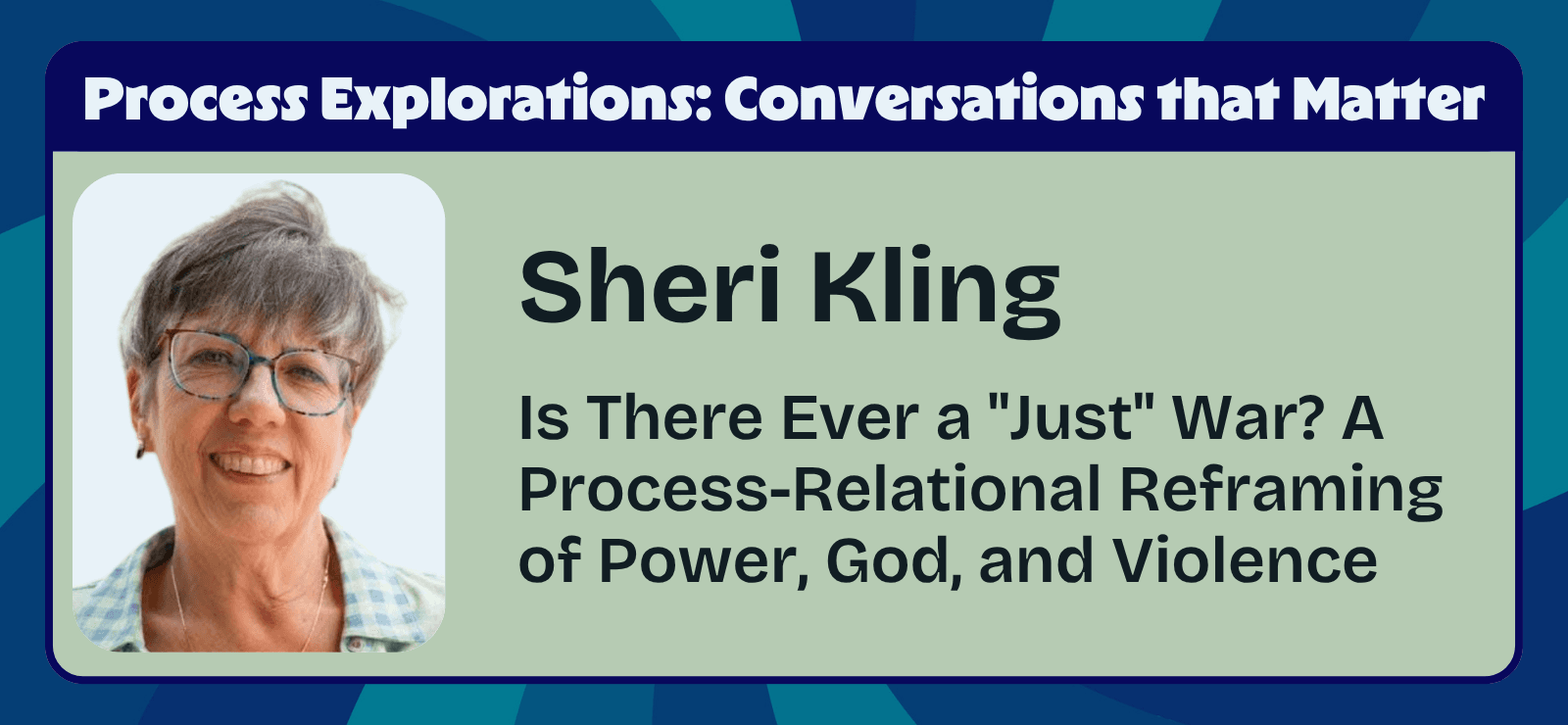
Is There Ever a “Just” War? A Process-Relational Reframing of Power, God, and Violence | Sheri Kling
In a time of rising global conflict and polarized rhetoric, this presentation explores the enduring question, Is there ever a “just” war? Drawing on process-relational theology and engaging voices such as Alfred North Whitehead, Thomas Jay Oord, Walter Wink, Catherine Keller, and Parker J. Palmer, Sheri D. Kling, director of Process & Faith, reframes traditional just war thinking through a relational lens that challenges assumptions about power, control, and violence.
Free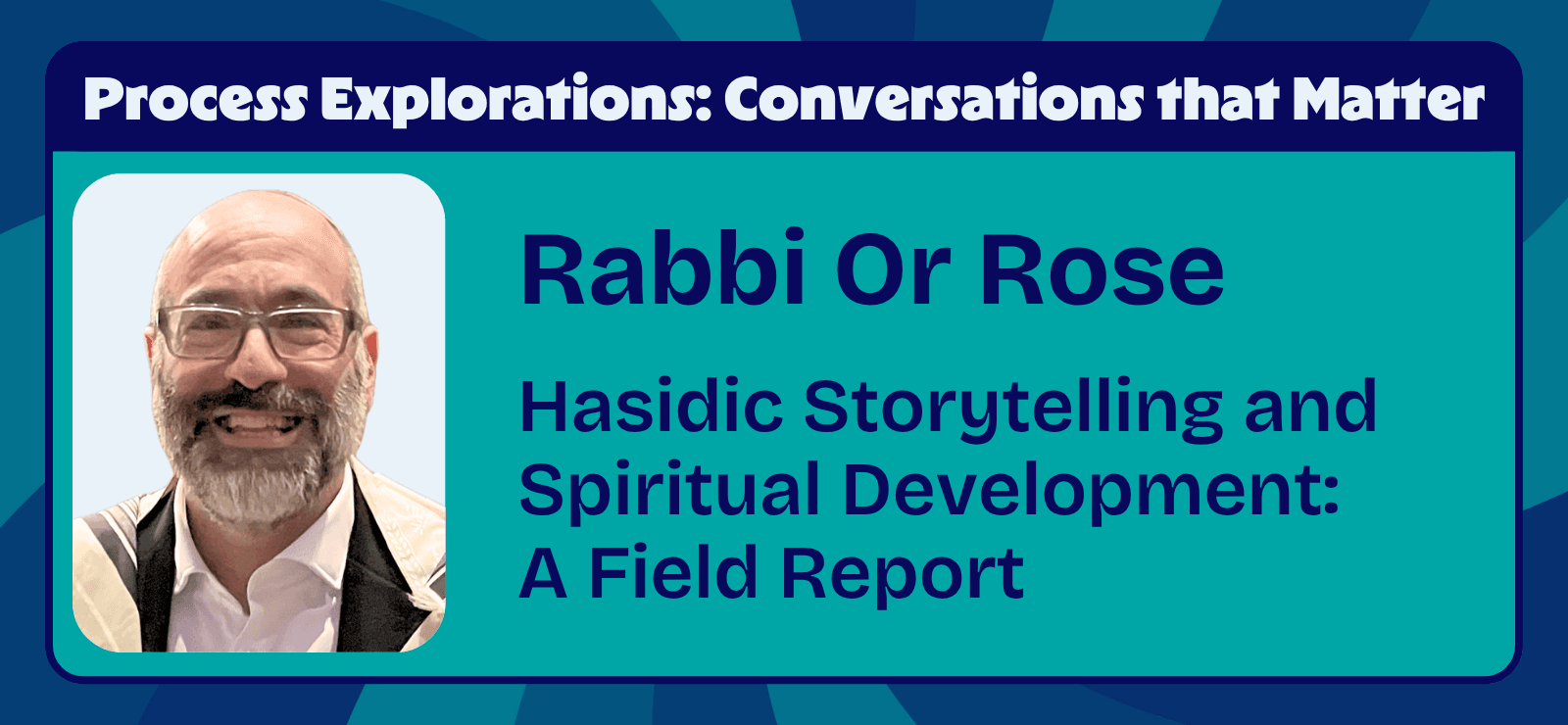
Hasidic Storytelling and Spiritual Development: A Field Report | Rabbi Or Rose
In this session, Rabbi Or Rose will explore a well-known Hasidic tale about mentorship and Torah study. In so doing, we will analyze the ways in which the storyteller calls us to heightened consciousness about the presence of divinity throughout the created world. Rabbi Rose will also examine how this story serves as a model of the power of storytelling as a sacred practice.
Free