Events
Calendar of Events
Sunday |
Monday |
Tuesday |
Wednesday |
Thursday |
Friday |
Saturday |
|---|---|---|---|---|---|---|
|
0 events,
|
0 events,
|
1 event,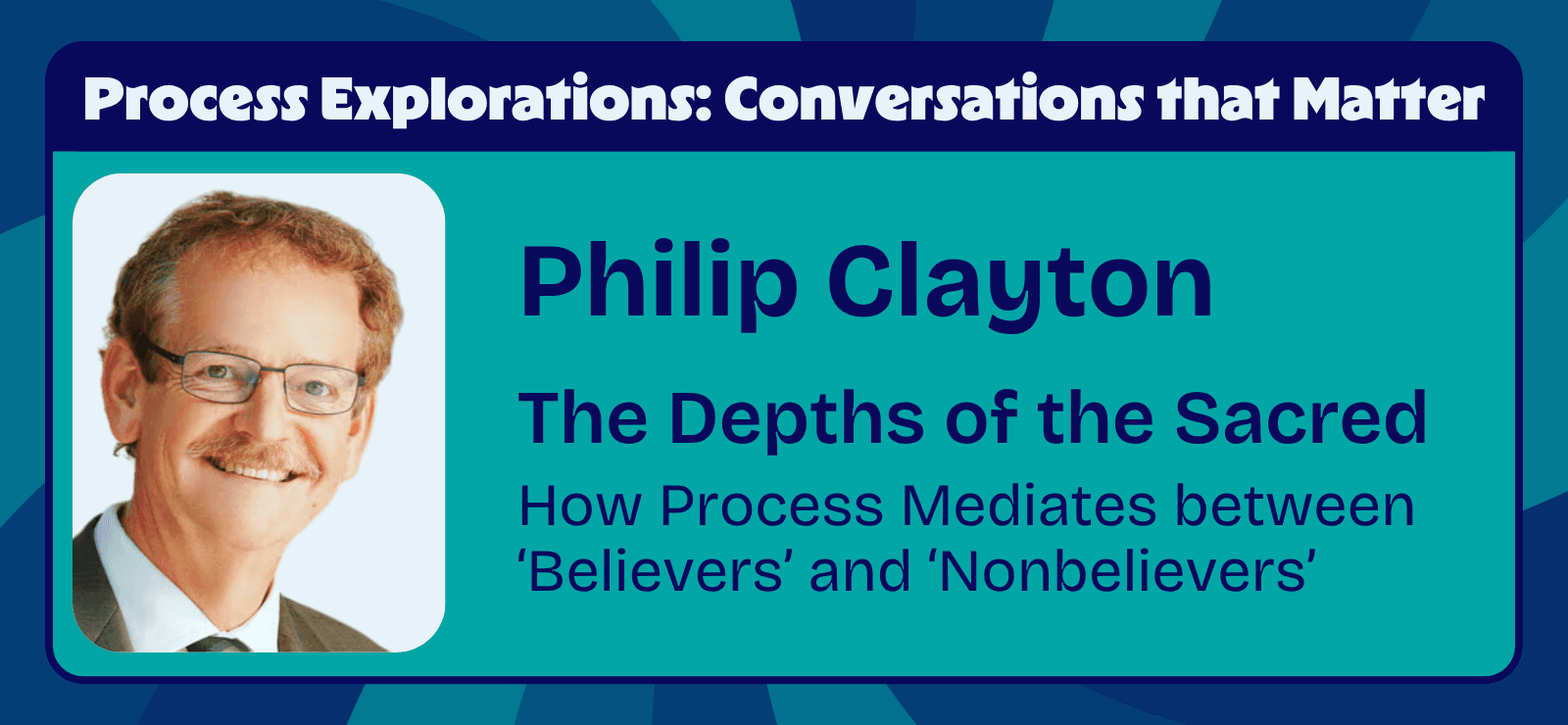 Conversations with process thinkers from Process Explorations inspired Philip Clayton's most recent book, Science and the Sacred: Beyond the Gods in Our Image. Now, a year later, he returns to the group that inspired the book to reflect with you on lessons learned since its publication, and to hear your responses.
Free |
0 events,
|
0 events,
|
0 events,
|
0 events,
|
|
0 events,
|
0 events,
|
1 event,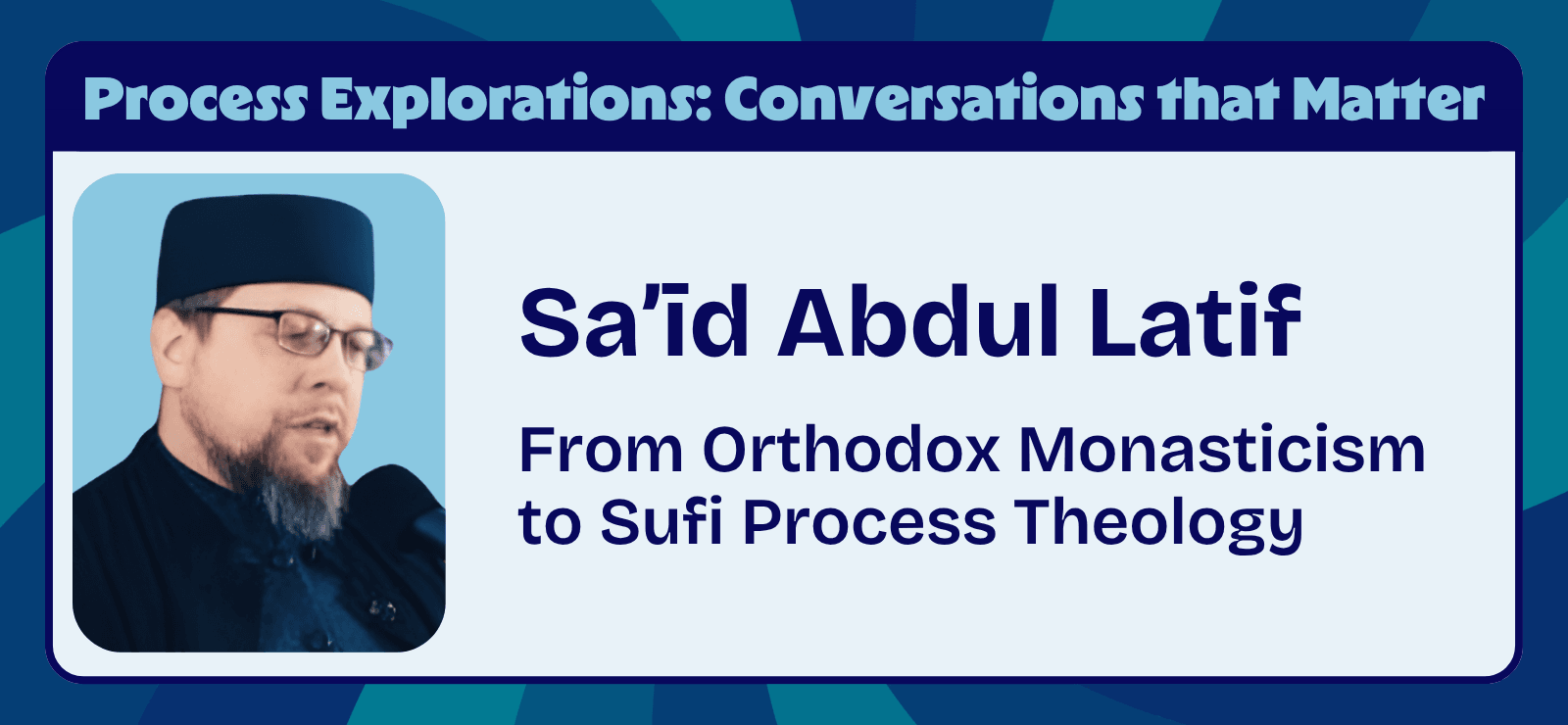 In this presentation, former Russian Orthodox priest-monk Sa’īd Abdul Latif (Troy Heagy) reflects on his journey from Eastern Christian monasticism to a form of process theology-informed Sufi Islam. He will explore his early understanding of faith and truth as adherence to correct dogma authoritatively defined by church, confession, or creed—the idea that one need only discover the right institution and submit to its formulations. He will then describe his gradual movement toward a more dynamic theological vision shaped by process thought and the metaphysical language of Ibn ʿArabī, particularly the doctrine of Wahdat al-Wujūd (“Unity of Being”).
Free |
1 event,
–
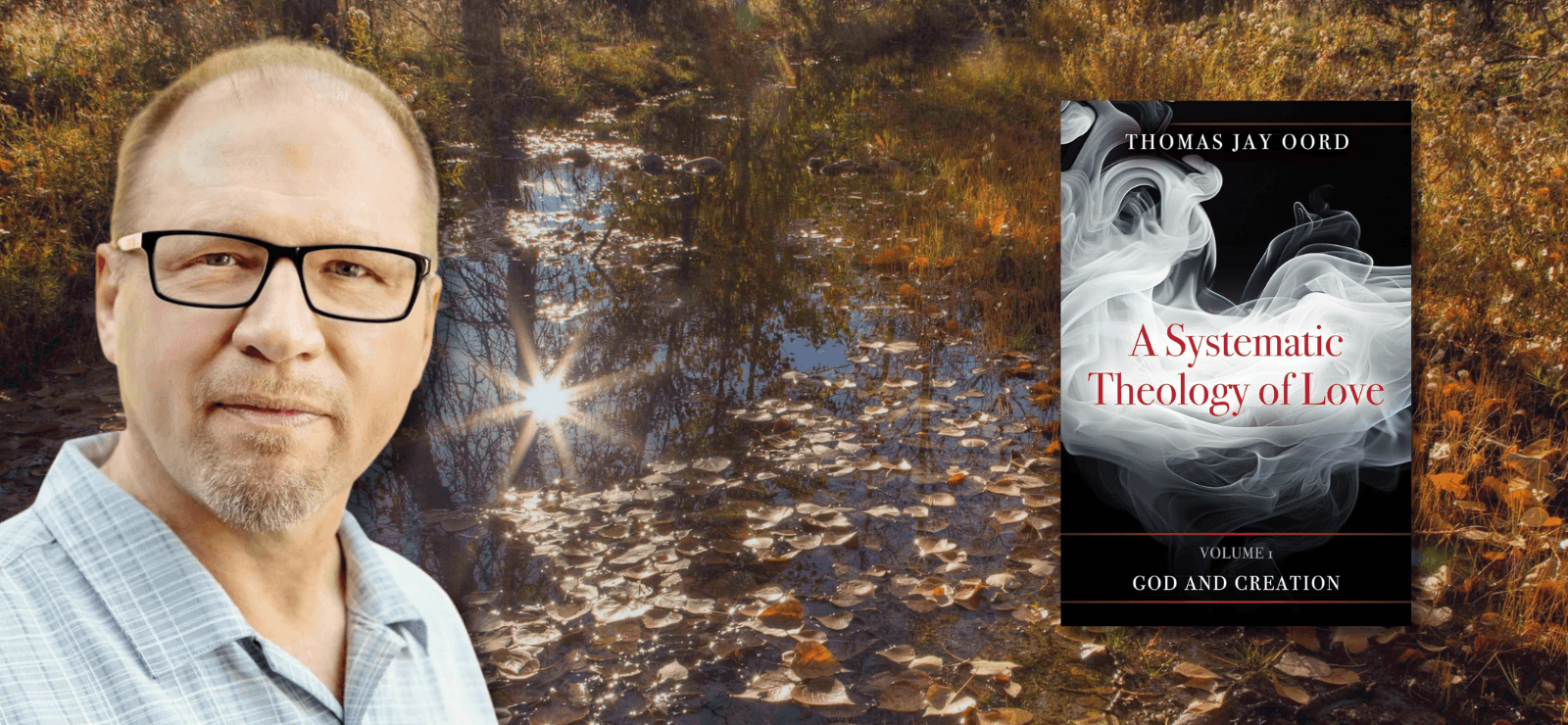 Apparently, Thomas Jay Oord has written the first book with the title, A Systematic Theology of Love. Oord not only puts love at the center of this thinking about God and creation, this central emphasis changes the way he considers core themes about God and creation. In this pop-up, Oord talks about what differences love makes to a consistent theology. |
0 events,
|
0 events,
|
0 events,
|
|
0 events,
|
1 event, This conference will be the first to birth this long overdue intellectual exchange as it offers an improved metaphysical framework for value and consciousness in all ontological entities to address various concerns that are facing humanity: economy, political, and environmental. Although there are hesitant answers to some of these global challenges facing humanity, the influence of substance-based analysis has yet to offer penetrative answers, in addition to the almost complete lack of interaction among scholars of process to explore their common ground for a common voice in the way that substance thought has done over the centuries. |
2 events,
Is There Ever a “Just” War? A Process-Relational Reframing of Power, God, and Violence | Sheri Kling 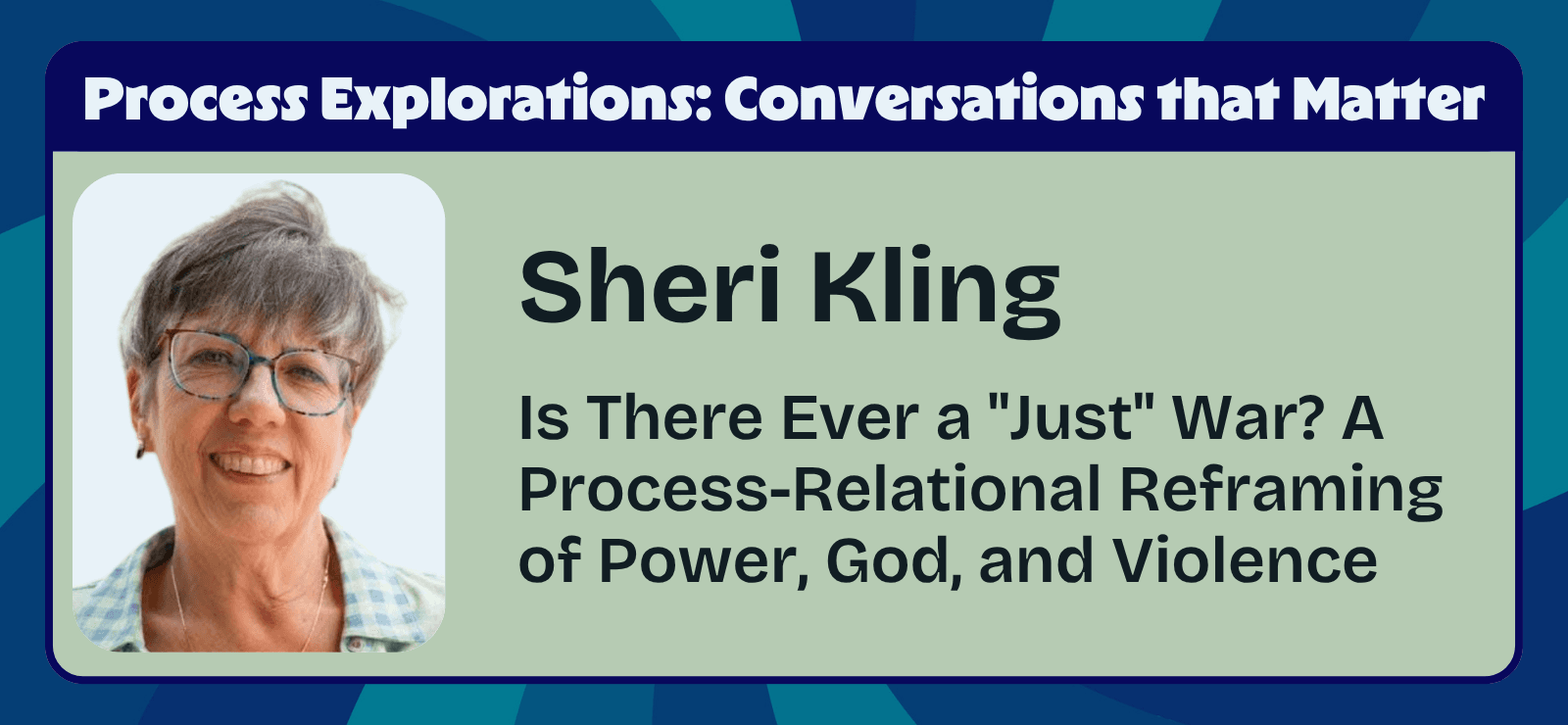
Is There Ever a “Just” War? A Process-Relational Reframing of Power, God, and Violence | Sheri Kling In a time of rising global conflict and polarized rhetoric, this presentation explores the enduring question, Is there ever a “just” war? Drawing on process-relational theology and engaging voices such as Alfred North Whitehead, Thomas Jay Oord, Walter Wink, Catherine Keller, and Parker J. Palmer, Sheri D. Kling, director of Process & Faith, reframes traditional just war thinking through a relational lens that challenges assumptions about power, control, and violence.
Free |
0 events,
|
0 events,
|
0 events,
| |
|
0 events,
|
0 events,
|
2 events,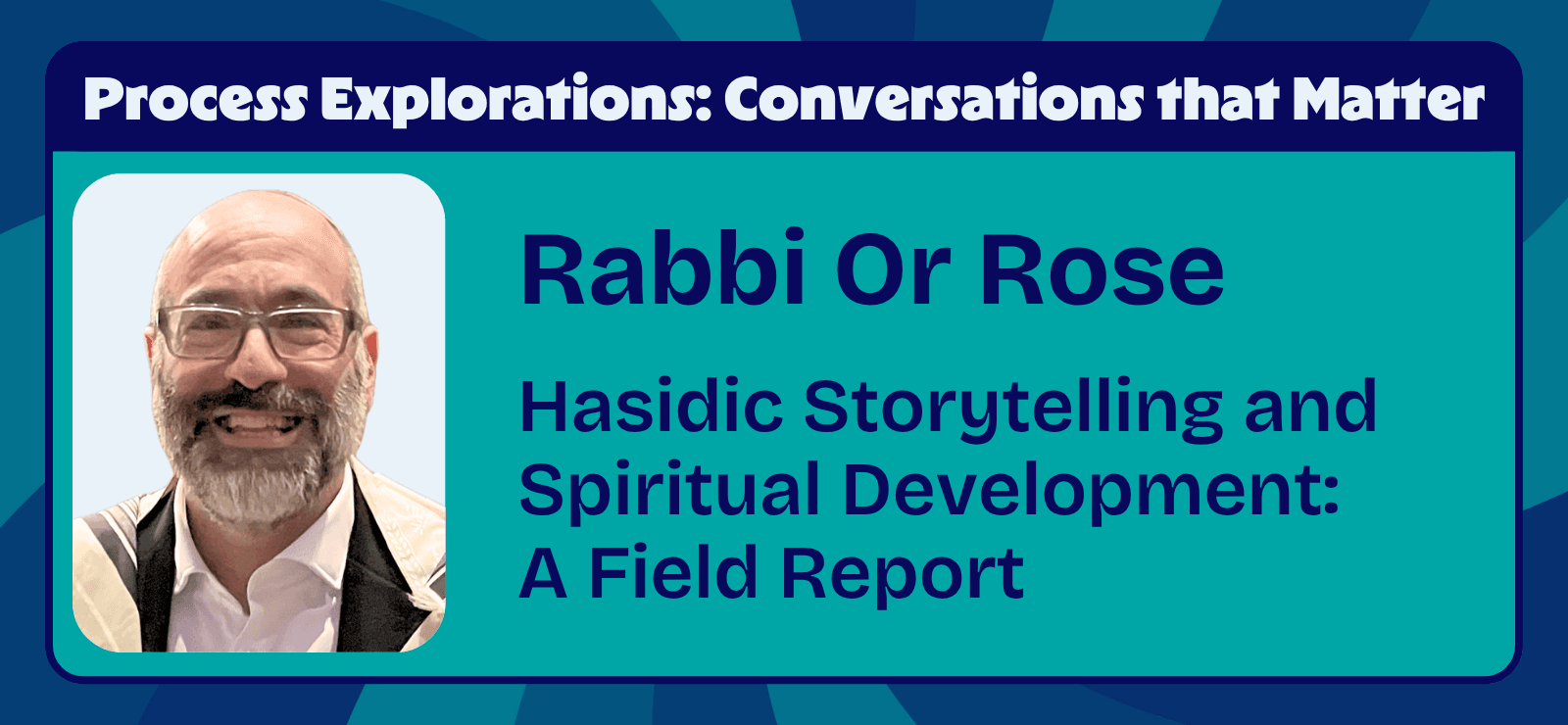 In this session, Rabbi Or Rose will explore a well-known Hasidic tale about mentorship and Torah study. In so doing, we will analyze the ways in which the storyteller calls us to heightened consciousness about the presence of divinity throughout the created world. Rabbi Rose will also examine how this story serves as a model of the power of storytelling as a sacred practice.
Free
–
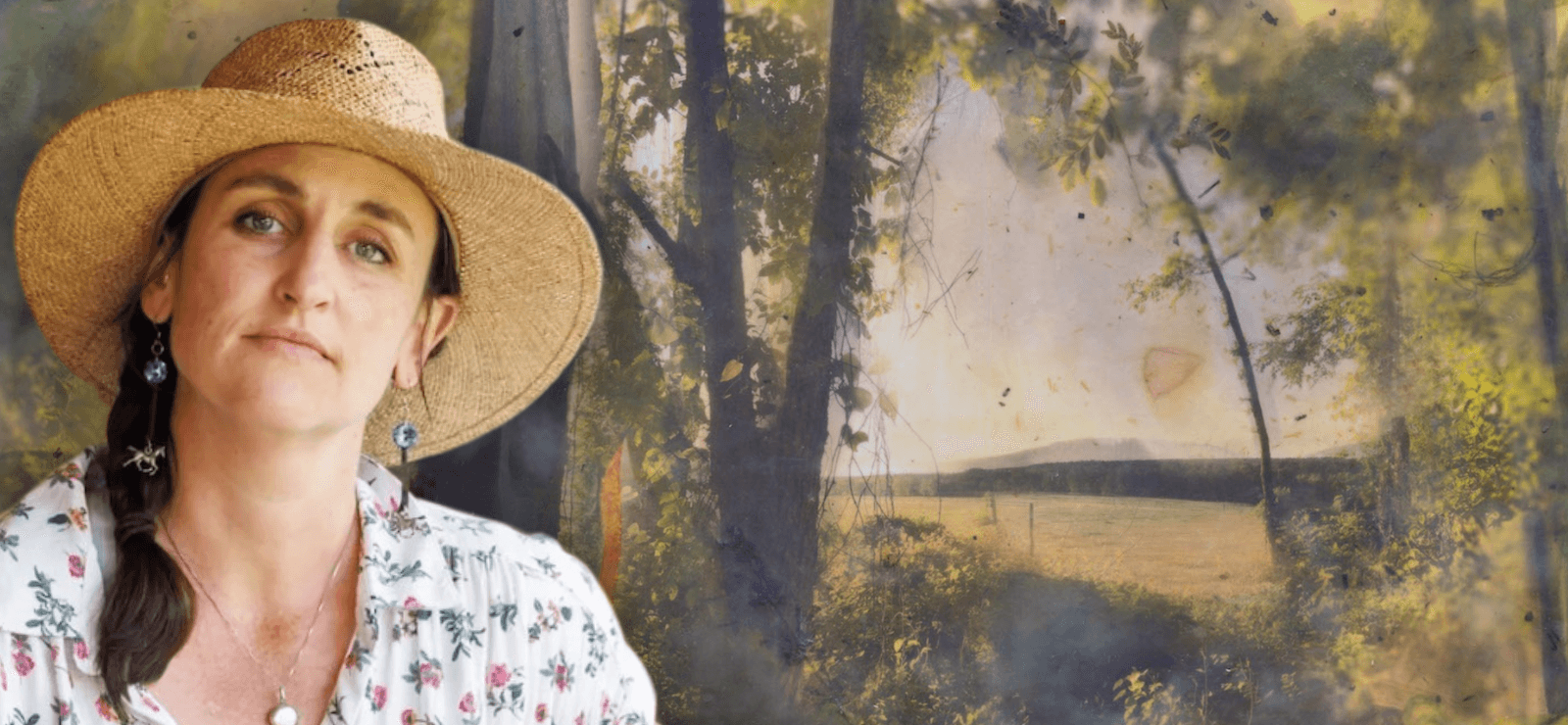 In this SPARKS Exchange Melissa Cowper-Smith will be sharing about her Artists Garden, where she gathers materials she transforms through her creative process. Her art is expressed through beekeeping, papermaking, fiber arts of weaving and spinning, and encaustic painting. This session's creative response will be generative scribing, where we gather words throughout the session that evoke the materiality of Melissa's process. To wrap-up the session, participants will weave these words into poetry.
Free |
0 events,
|
0 events,
|
0 events,
|
0 events,
|
|
0 events,
|
0 events,
|
1 event,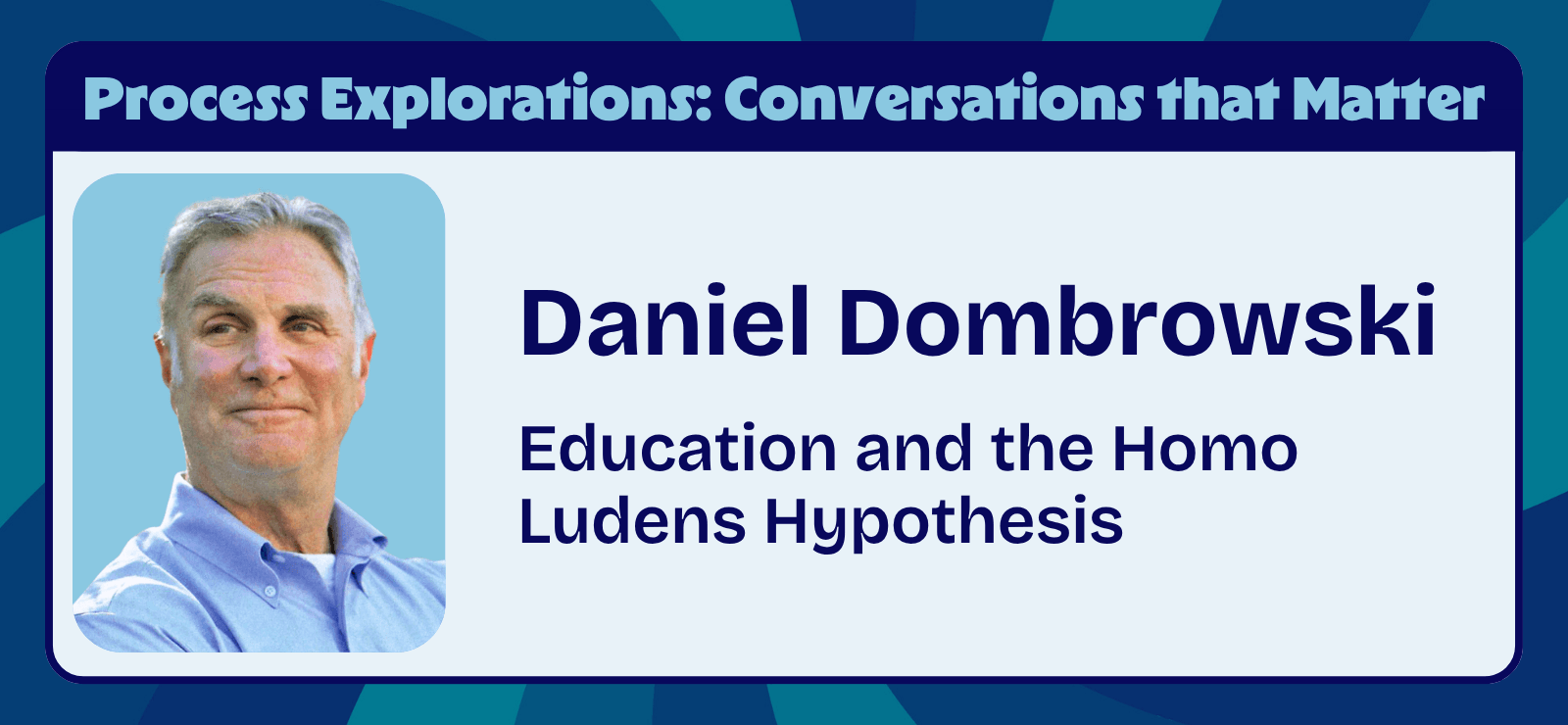 The philosopher George Allan—in three well-written books in philosophy of education—applies the Homo Ludens hypothesis to education, especially to higher education. College education at its best is a type of dynamic play. Allan’s contribution to the Homo Ludens hypothesis has been underappreciated. Allan often relies on the process thought found in Alfred North Whitehead’s classic Aims of Education. The goal of the present presentation is to explore the important contribution Allan can make toward the understanding of the contemporary crumbling of the walls of the cathedral of learning, to use his dramatic metaphor.
Free |
0 events,
|
0 events,
|
0 events,
|
0 events,
|
|
0 events,
|
0 events,
|
1 event,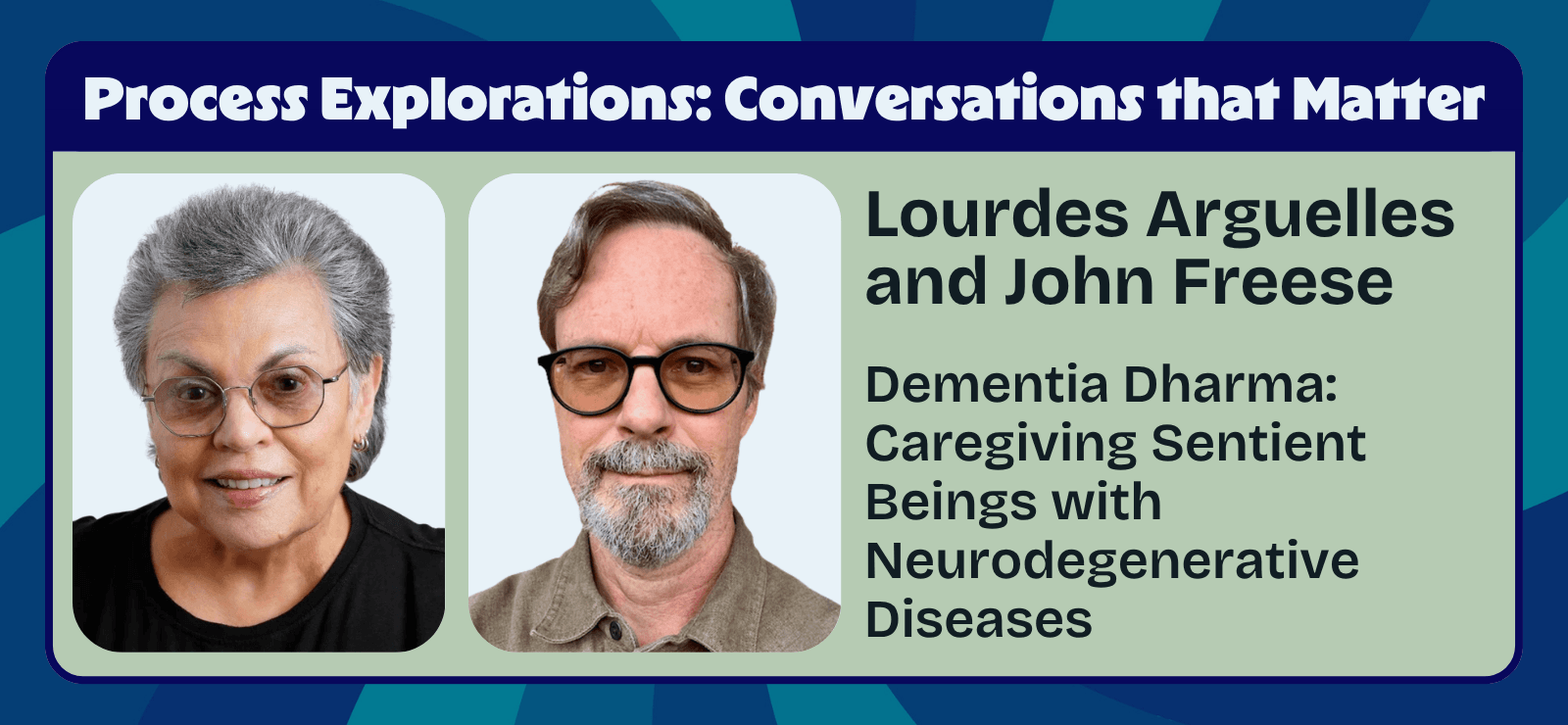 In this session, Lopon Dorje Khandro and Rev. Dr. Dhammabodhi will briefly explore critical intersections between Buddhism, New Paradigm Sciences, and the Practicalities of Dementia Caregiving in the United States. They will focus on how to maintain a radical compassionate caregiving presence, insure the provision of essential and non-exploitative care, and recognize the “luminous mind” while serving humans and animals whose physical capacities, cognitive functions, and identities are fading. The presenters will also share their main Buddhist and caregiving practices such as Tonglen (sending and taking), Chod (cutting practice), Acceptance and Commitment Therapy (ACT), and some new and old visual, sound, touch and olfactory therapies.
Free |
0 events,
|
0 events,
|
0 events,
|
0 events,
|